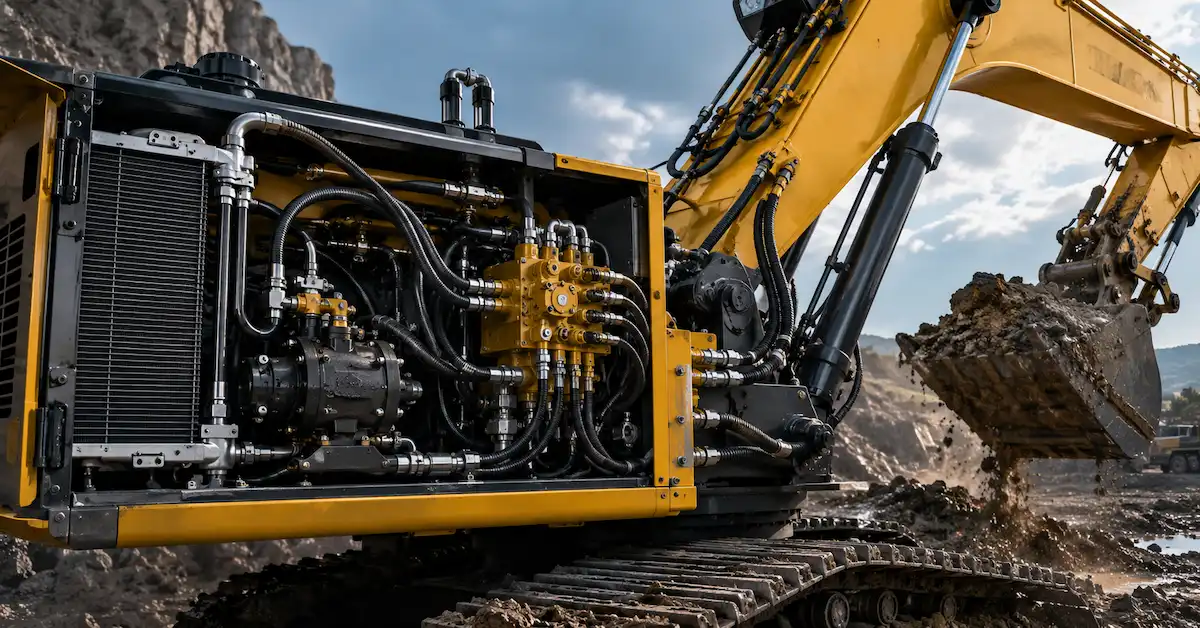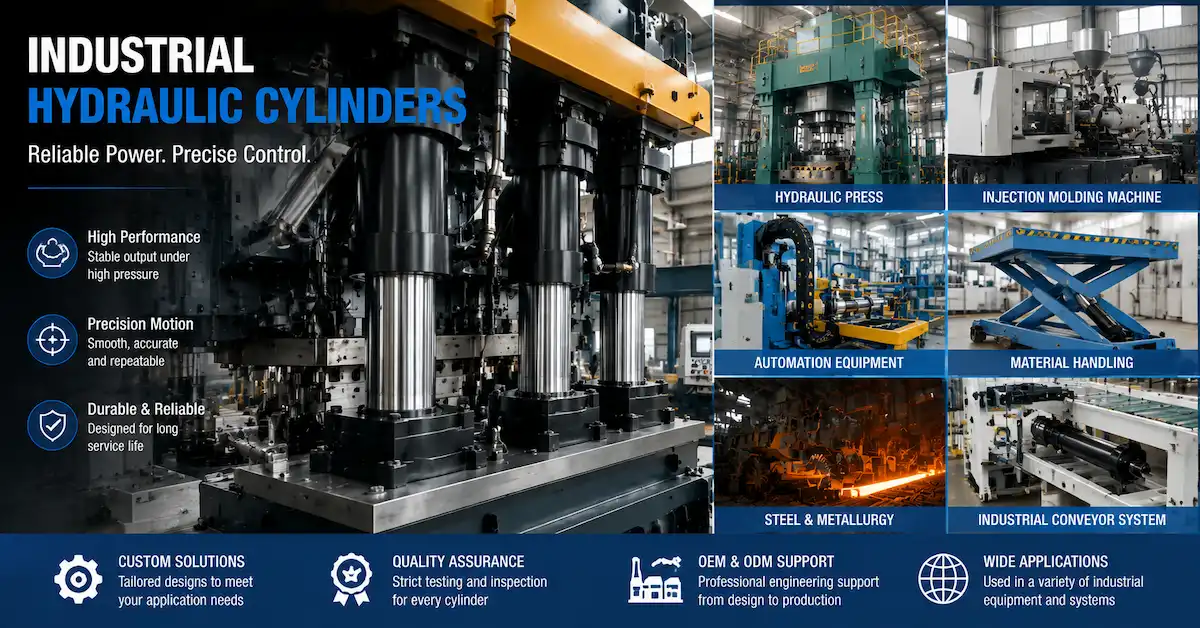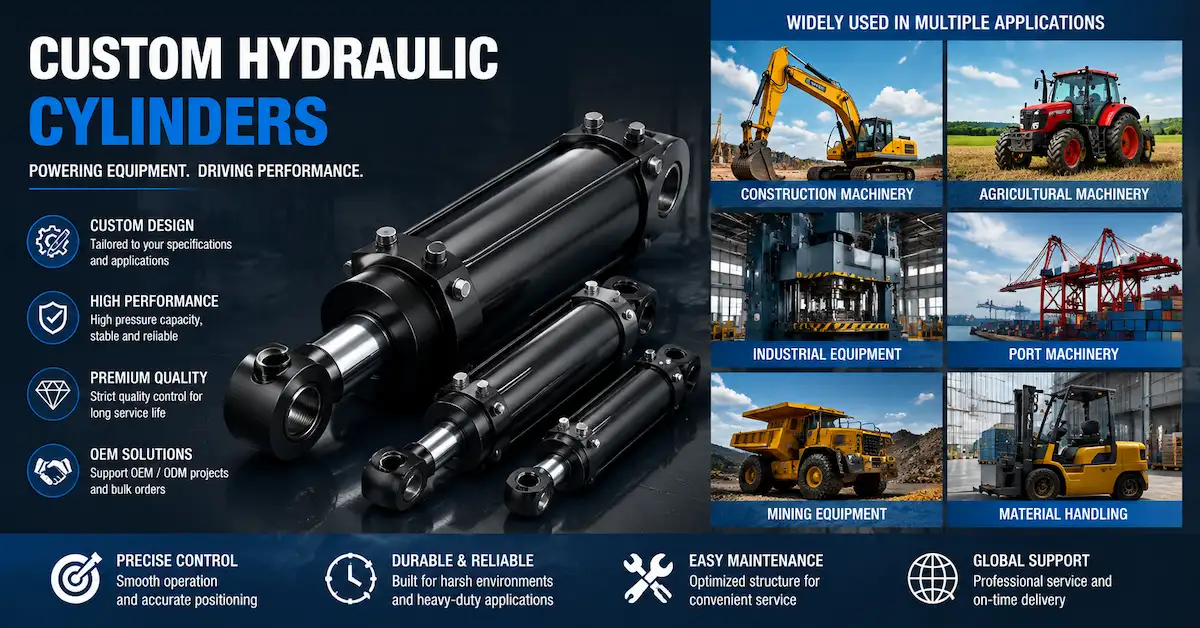



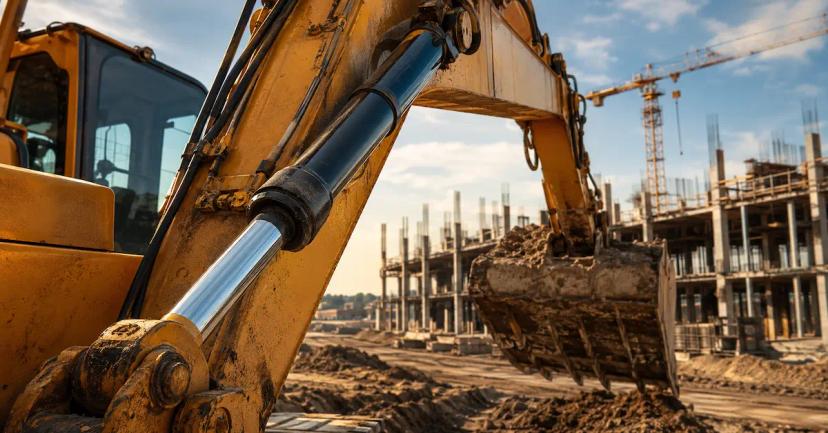
A hydraulic cylinder for construction equipment is one of the most important components in modern heavy machinery. It converts hydraulic energy into linear mechanical force, allowing equipment to perform lifting, digging, pushing, pulling, tilting, clamping, and positioning operations.
Construction machines such as excavators, loaders, bulldozers, cranes, drilling machines, compactors, and pavers operate under demanding conditions. Hydraulic cylinders must withstand high pressure, heavy loads, vibration, dust, impact forces, and continuous working cycles.
For OEM equipment manufacturers, construction machinery distributors, repair companies, and fleet operators, selecting the correct hydraulic cylinder directly affects machine productivity, operating safety, maintenance cost, and service life.
A properly designed hydraulic cylinder helps construction equipment achieve:
- Strong lifting force
- Smooth movement
- Reliable load holding
- Reduced leakage risk
- Longer service life
- Lower maintenance frequency
BLINCE supplies hydraulic cylinders and related hydraulic components for construction and industrial applications, including hydraulic motors, pumps, valves, coolers, hoses, fittings, steering control units, and complete hydraulic solutions.
Explore BLINCE hydraulic products:
https://www.blincehydraulic.com/products
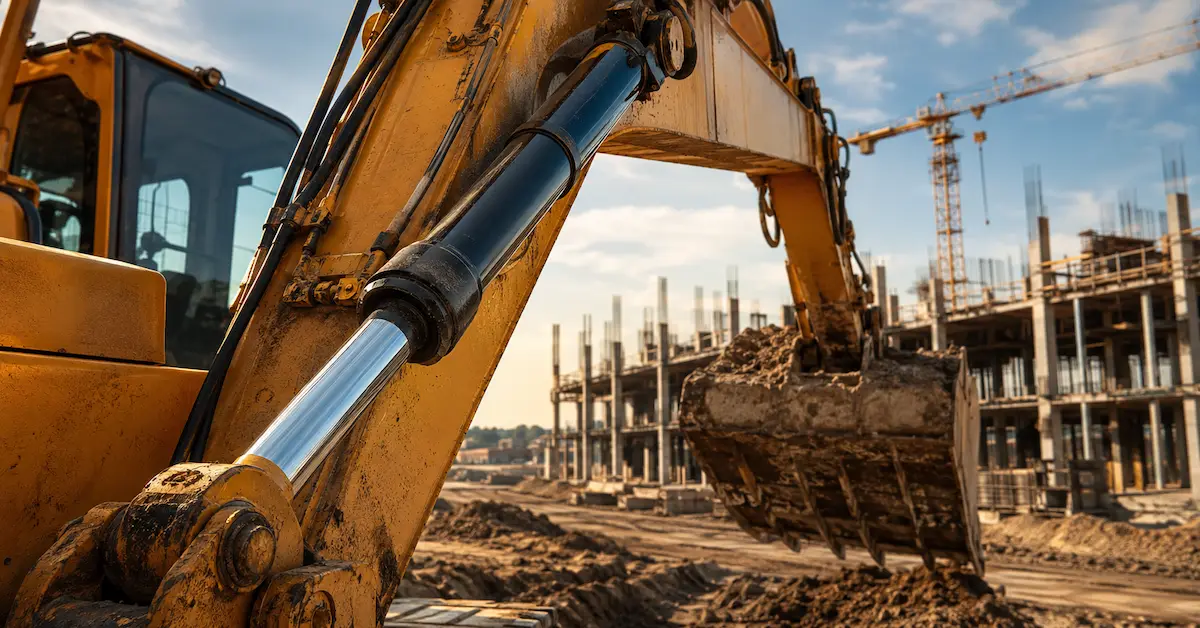
Why Hydraulic Cylinders Are Critical in Construction Equipment
Construction equipment operates in some of the most challenging environments. Unlike indoor industrial machines, construction machinery is exposed to:
- Dust and sand
- Mud and water
- Heavy vibration
- Shock loads
- Temperature changes
- Continuous outdoor operation
- Uneven working surfaces
The hydraulic cylinder is responsible for transferring hydraulic power into mechanical movement. If the cylinder performance is unstable, the entire machine efficiency can decrease.
For example:
Excavators
Hydraulic cylinders control:
- Boom lifting
- Arm movement
- Bucket operation
- Blade adjustment
Wheel Loaders
Hydraulic cylinders control:
- Bucket lifting
- Bucket tilting
- Steering assistance
Cranes
Hydraulic cylinders control:
- Boom extension
- Lifting movement
- Stabilizer operation
Bulldozers and Compactors
Hydraulic cylinders control:
- Blade positioning
- Equipment adjustment
- Working attachment movement
Because these machines often operate under heavy loads, the hydraulic cylinder must provide consistent force and reliable sealing.
Common Problems When Choosing Hydraulic Cylinders for Construction Equipment
Many buyers search for a hydraulic cylinder for construction equipment because they need to solve specific equipment problems.
1. Cylinder Leakage During Operation
Oil leakage is one of the most common hydraulic cylinder problems.
Possible causes include:
- Poor seal quality
- Damaged piston rod surface
- Incorrect pressure rating
- Contaminated hydraulic oil
- Improper installation
For construction equipment, seal reliability is especially important because leakage can quickly reduce machine efficiency.
2. Insufficient Lifting Force
If the cylinder cannot generate enough force, the equipment may experience:
- Slow lifting
- Weak digging performance
- Difficulty handling heavy loads
- Reduced productivity
The cylinder bore size, pressure rating, and hydraulic system matching must be correctly calculated.
3. Bent or Damaged Piston Rod
Construction machinery often experiences side loads and impact forces.
A weak piston rod may cause:
- Bending
- Surface scratches
- Seal damage
- Cylinder failure
Heavy-duty construction cylinders usually require:
- High-strength rod materials
- Proper diameter selection
- Surface hardening or chrome plating
- Accurate alignment
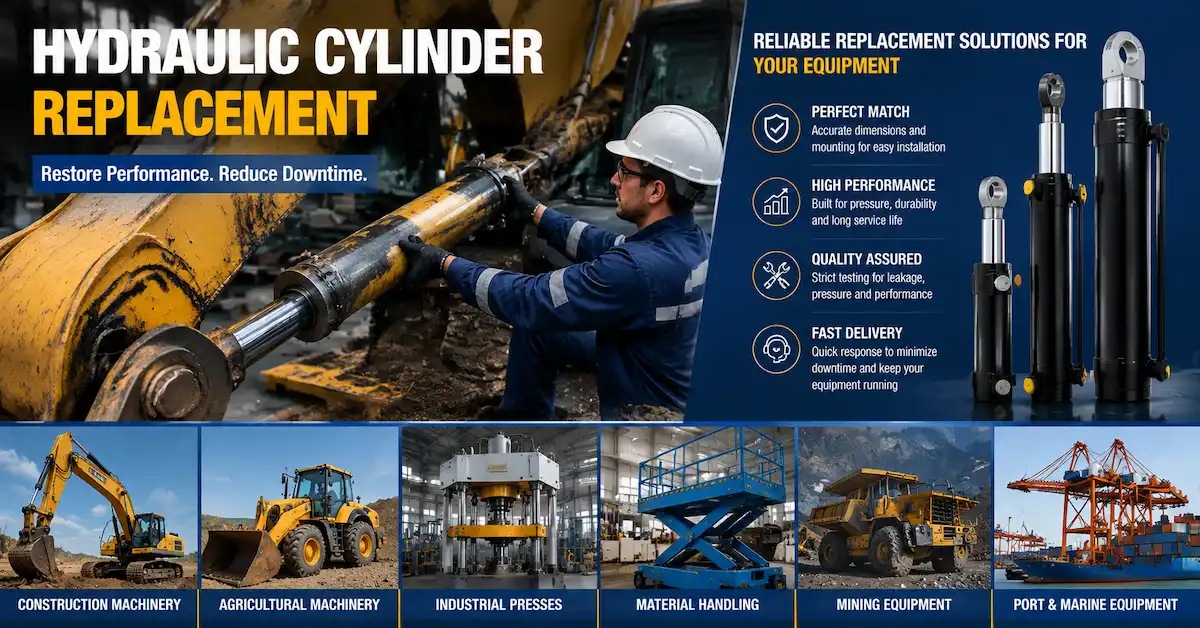
4. Wrong Replacement Cylinder Dimensions
Replacement projects often fail because of incorrect:
- Stroke length
- Bore diameter
- Rod diameter
- Mounting style
- Pin hole size
- Port position
Before ordering, buyers should provide drawings, photos, or old cylinder information.
Main Types of Hydraulic Cylinders Used in Construction Equipment
| Cylinder Type | Features | Common Applications |
|---|---|---|
| Boom Hydraulic Cylinder | High force and stable lifting | Excavators, cranes |
| Bucket Hydraulic Cylinder | Controls digging and loading actions | Excavators, loaders |
| Arm Hydraulic Cylinder | Provides extension and movement | Excavators |
| Steering Hydraulic Cylinder | Controls direction movement | Loaders, mobile equipment |
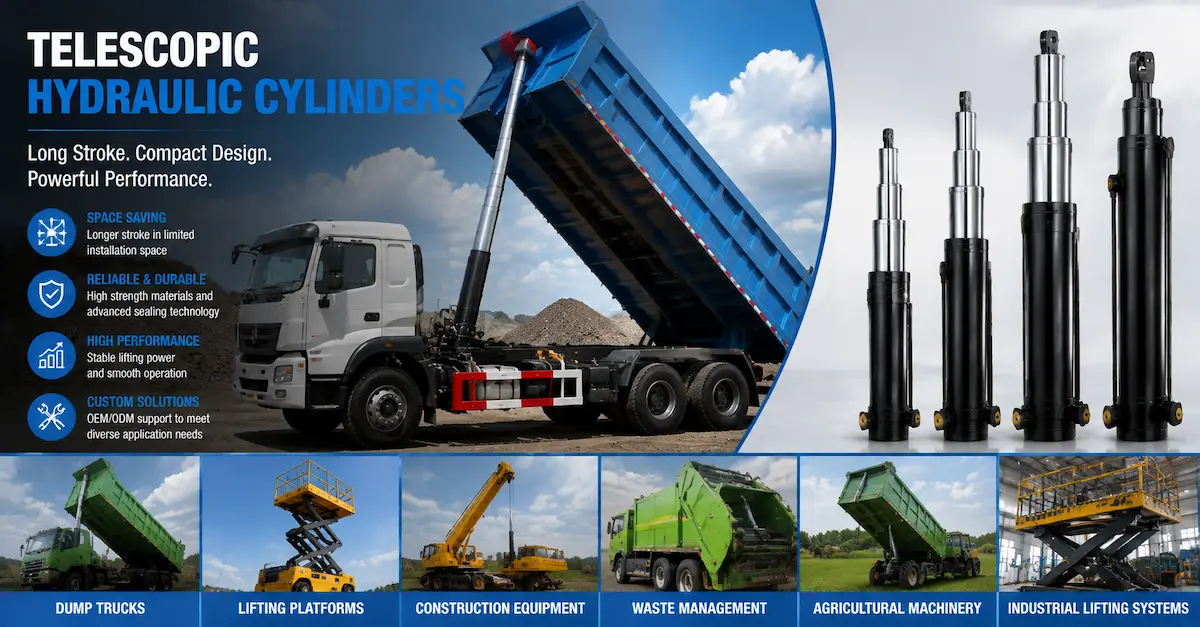
| Telescopic Hydraulic Cylinder | Provides long stroke in limited space | Dump trucks, lifting systems |
| Custom Hydraulic Cylinder | Designed for specific requirements | OEM construction equipment |
Key Parameters for Selecting Construction Equipment Hydraulic Cylinders
Before purchasing a hydraulic cylinder, buyers should confirm the following specifications:
| Parameter | Importance |
| Bore Diameter | Determines pushing and lifting force |
| Rod Diameter | Affects strength and bending resistance |
| Stroke Length | Determines movement distance |
| Working Pressure | Defines load capability |
| Peak Pressure | Handles sudden load changes |
| Mounting Type | Ensures correct installation |
| Pin Diameter | Important for replacement compatibility |
| Port Thread | Prevents leakage and connection issues |
| Retracted Length | Confirms installation space |
| Extended Length | Confirms working range |
| Seal Material | Determines leakage resistance |
| Rod Surface Treatment | Improves wear resistance |
| Working Environment | Determines protection requirements |
A professional supplier should confirm these details before recommending a cylinder model.
BLINCE provides technical support for hydraulic product selection, troubleshooting, and application matching.
Technical support:
https://www.blincehydraulic.com/about-us#technical-support
How to Choose the Right Hydraulic Cylinder for Construction Equipment
1. Understand the Machine Application
Different construction machines require different cylinder designs.
An excavator cylinder requires:
- High impact resistance
- Strong digging force
- Reliable sealing
A crane cylinder requires:
- Stable lifting performance
- Strong load holding capability
A loader cylinder requires:
- Frequent cycling ability
- Good fatigue resistance
The cylinder should be selected according to actual machine operation.
2. Match Pressure and Load Requirements
Construction equipment often experiences changing loads.
The supplier should consider:
- Normal working pressure
- Maximum pressure
- Shock load
- Continuous operation time
- Safety margin
Choosing a cylinder only based on physical size may result in poor performance.
3. Check Mounting Compatibility
A correct cylinder must match the equipment structure.
Important dimensions include:
- Pin connection
- Mounting bracket
- Cylinder length
- Port location
- Installation angle
For replacement cylinders, old part photos and drawings are extremely helpful.
4. Evaluate Sealing Performance
Construction environments are harsh. Dust and contamination can quickly damage poor sealing systems.
A reliable cylinder should use:
- Suitable seal materials
- Proper guide rings
- Accurate sealing grooves
- Good rod surface quality
5. Consider Maintenance and Service Life
A high-quality hydraulic cylinder can reduce:
- Downtime
- Repair frequency
- Oil leakage
- Replacement cost
For construction companies, reliability is often more valuable than the initial purchase price.
Construction Equipment Applications
Hydraulic cylinders are widely used in:
Excavators
Applications:
- Boom cylinders
- Arm cylinders
- Bucket cylinders
Requirements:
- High pressure resistance
- Shock load capability
- Reliable sealing
Wheel Loaders
Applications:
- Lift cylinders
- Tilt cylinders
- Steering cylinders
Requirements:
- Frequent operation capability
- Smooth movement
- Strong load performance
Cranes
Applications:
- Boom lifting cylinders
- Stabilizer cylinders
Requirements:
- Safe load holding
- High reliability
- Precise movement
Bulldozers and Road Machinery
Applications:
- Blade cylinders
- Adjustment cylinders
Requirements:
- Heavy load resistance
- Dust protection
- Long service life
Mining and Heavy Construction Equipment
Applications:
- Large lifting systems
- Hydraulic support systems
Requirements:
- Extreme durability
- High pressure capability
- Custom engineering
More BLINCE application fields:
https://www.blincehydraulic.com/applications
Hydraulic Cylinder Quality Checklist for Construction Machinery
| Check Item | Why It Matters |
| Cylinder Material | Determines strength |
| Rod Quality | Affects wear resistance |
| Seal Performance | Prevents leakage |
| Welding Quality | Ensures structural reliability |
| Machining Accuracy | Controls internal performance |
| Pressure Testing | Confirms safety |
| Leakage Testing | Ensures reliability |
| Surface Protection | Improves environmental resistance |
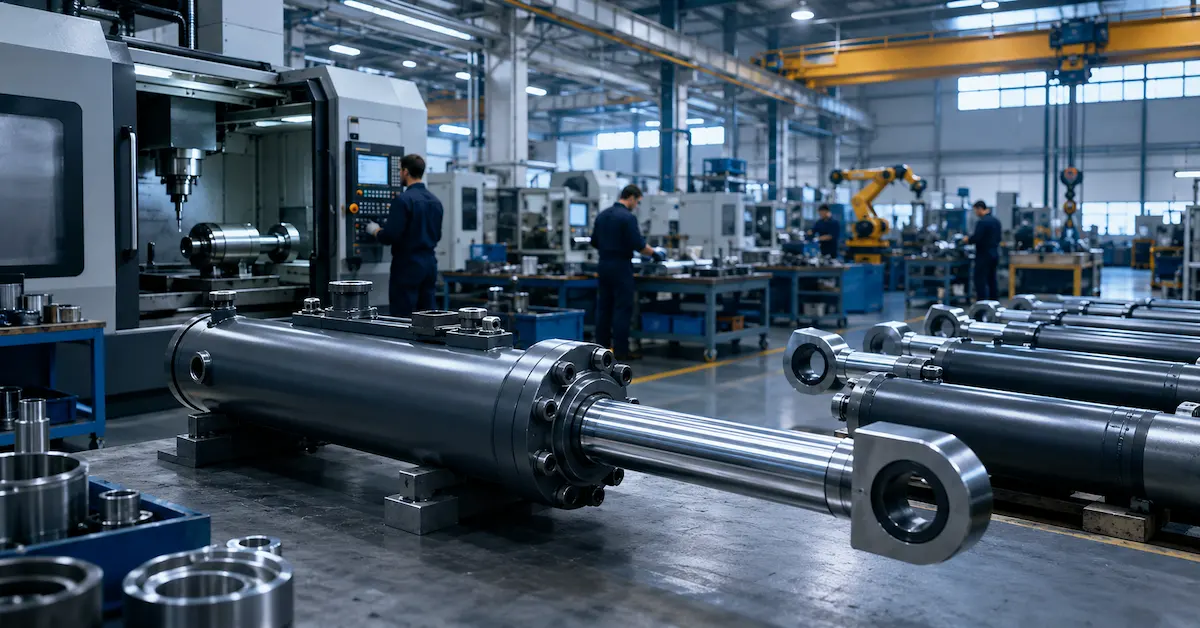
BLINCE focuses on manufacturing capability and quality control for hydraulic components.
Manufacturing capabilities:
https://www.blincehydraulic.com/about-us#manufacturing-capabilities
Certificates:
https://www.blincehydraulic.com/about-us#certificates
OEM Hydraulic Cylinder Solutions for Construction Equipment
Construction machinery manufacturers often require customized cylinders.
OEM requirements may include:
- Custom bore size
- Custom stroke length
- Special mounting design
- Different port positions
- Customized seals
- Special surface treatment
- Private labeling
- Batch production support
A reliable OEM supplier should work with engineering teams to confirm drawings, samples, testing requirements, and production specifications.
What Information Should You Send for a Quote?
To get an accurate quotation for a hydraulic cylinder for construction equipment, provide:
| Information | Example |
| Machine Type | Excavator, loader, crane, bulldozer |
| Cylinder Position | Boom, arm, bucket, steering |
| Bore Diameter | mm |
| Rod Diameter | mm |
| Stroke Length | mm |
| Working Pressure | MPa/bar |
| Mounting Type | Pin, flange, clevis |
| Port Thread | BSP, NPT, SAE |
| Old Cylinder Photos | Replacement matching |
| Drawings | OEM projects |
| Quantity | Sample or bulk order |
Send your requirements through the BLINCE contact page:
https://www.blincehydraulic.com/contact-us
Why Choose BLINCE for Construction Equipment Hydraulic Cylinders?
BLINCE provides hydraulic cylinder solutions for construction machinery and other heavy-duty applications.
Advantages include:
- Hydraulic component experience
- OEM and replacement support
- Technical selection assistance
- Application-based recommendations
- Manufacturing capability
- Quality control process
- Support for complete hydraulic systems
BLINCE can help customers match hydraulic cylinders with:
- Hydraulic pumps
- Hydraulic valves
- Hydraulic motors
- Hydraulic hoses
- Hydraulic fittings
- Hydraulic coolers
FAQ
1. What is a hydraulic cylinder for construction equipment?
It is a hydraulic actuator that converts hydraulic pressure into linear movement for excavators, loaders, cranes, bulldozers, and other heavy machinery.
2. What hydraulic cylinders are used in excavators?
Excavators commonly use boom cylinders, arm cylinders, and bucket cylinders.
3. How do I choose the correct construction equipment hydraulic cylinder?
Confirm bore size, rod diameter, stroke, pressure, mounting dimensions, ports, working environment, and machine model.
4. Can BLINCE provide OEM hydraulic cylinders?
Yes. BLINCE supports custom hydraulic cylinder projects based on drawings, specifications, and application requirements.
5. What causes hydraulic cylinder leakage?
Common causes include worn seals, rod damage, contamination, excessive pressure, and improper installation.
6. Why are heavy-duty cylinders important for construction machinery?
They provide stronger force, better durability, and improved reliability under high-load working conditions.
7. Can BLINCE replace an old excavator cylinder?
Yes. Customers can provide old cylinder photos, dimensions, and machine information for replacement matching.
Conclusion
A reliable hydraulic cylinder for construction equipment is essential for machine performance, safety, and productivity. Excavators, loaders, cranes, bulldozers, and other heavy machinery require cylinders that can withstand pressure, impact, vibration, and harsh environments.
Choosing the right cylinder requires more than checking dimensions. Buyers should evaluate pressure capability, material quality, sealing performance, mounting compatibility, testing standards, and supplier technical support.
BLINCE supports construction equipment manufacturers, distributors, and repair companies with hydraulic cylinder selection, OEM customization, replacement matching, and complete hydraulic component solutions.
Send your machine model, cylinder dimensions, pressure requirements, drawings, photos, and quantity to BLINCE for a suitable hydraulic cylinder solution.