


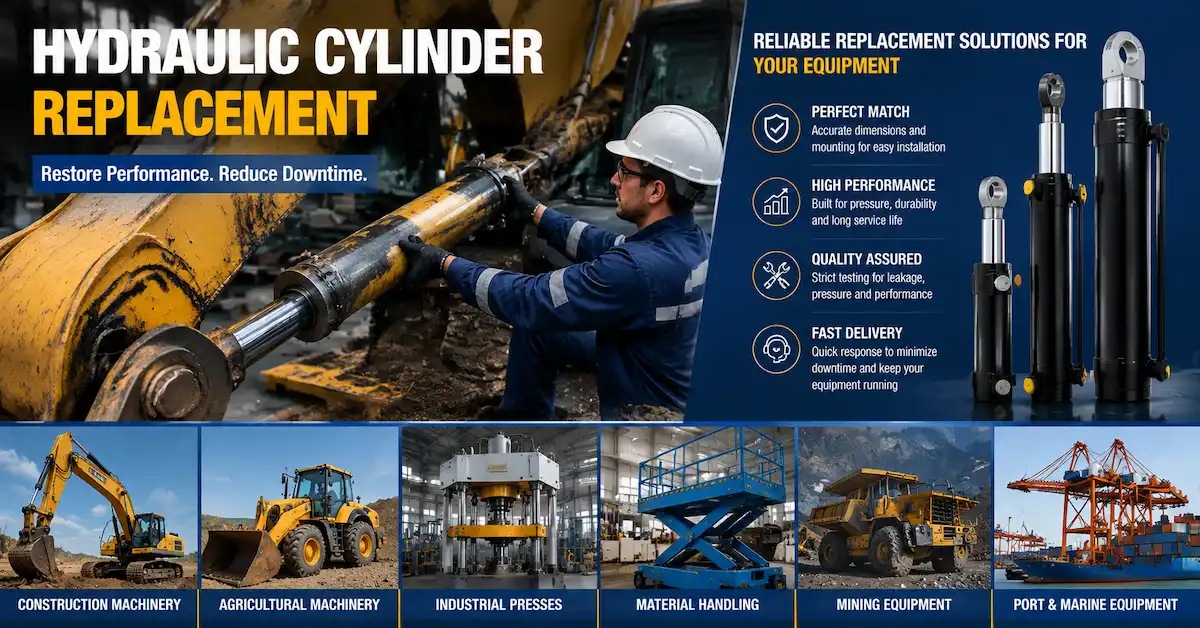
A hydraulic cylinder replacement is often required when machinery experiences leakage, reduced force, unstable movement, rod damage, or cylinder failure. Choosing the correct replacement cylinder is essential because even small differences in dimensions, pressure rating, mounting design, or port connection can prevent proper installation.
Hydraulic cylinders are widely used in:
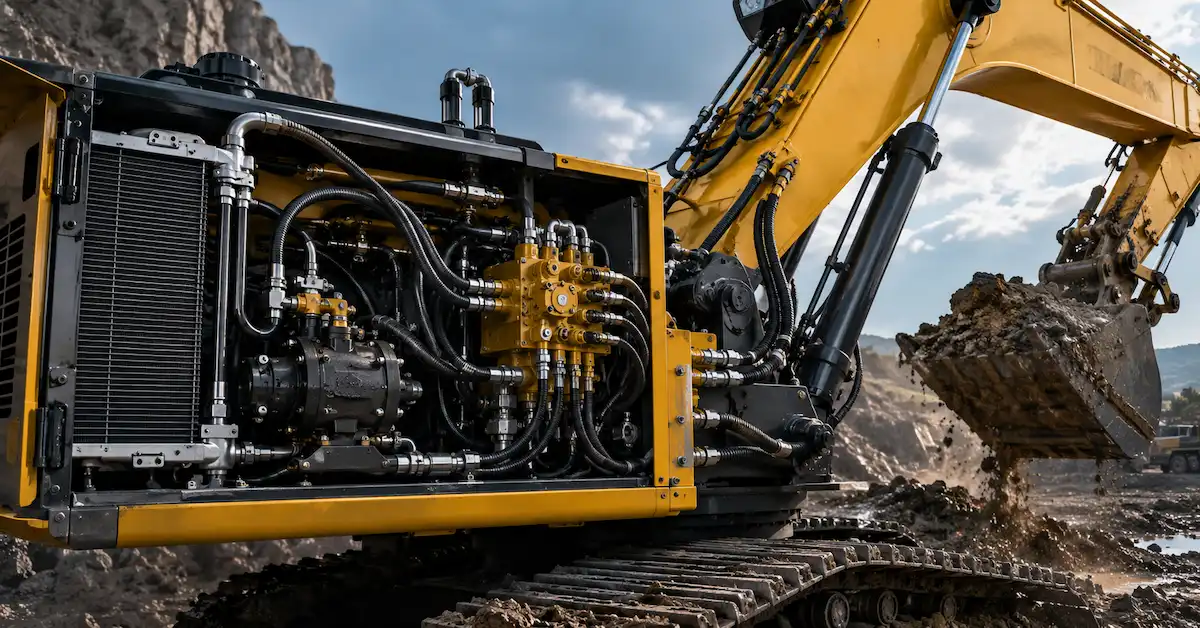
- Excavators
- Loaders
- Cranes
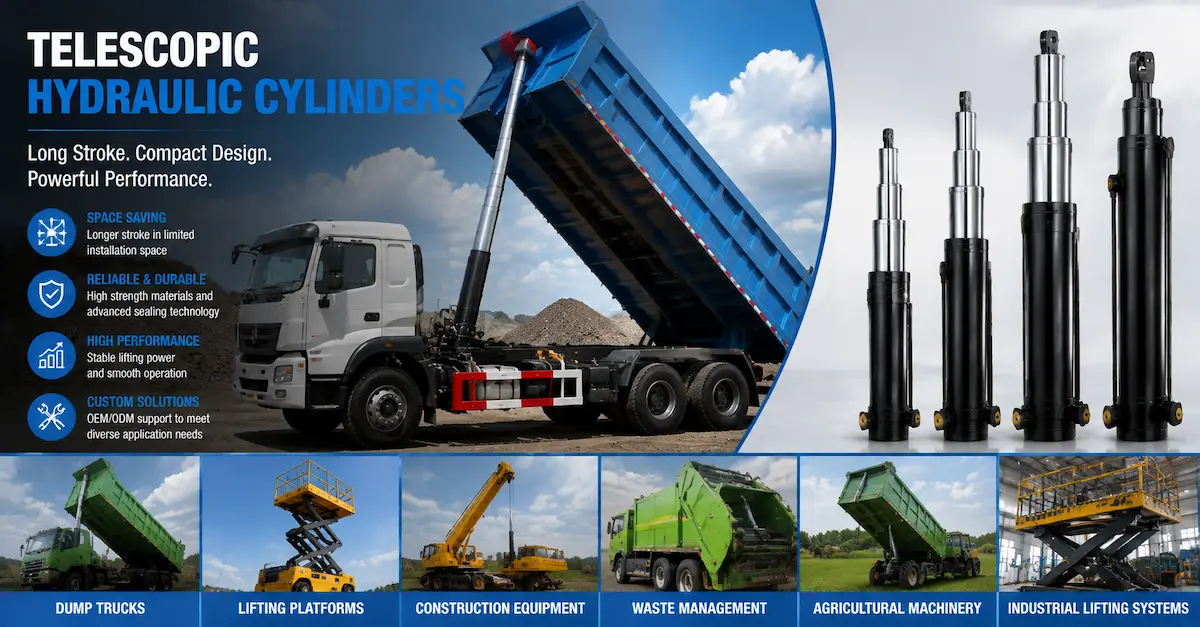
- Agricultural machinery
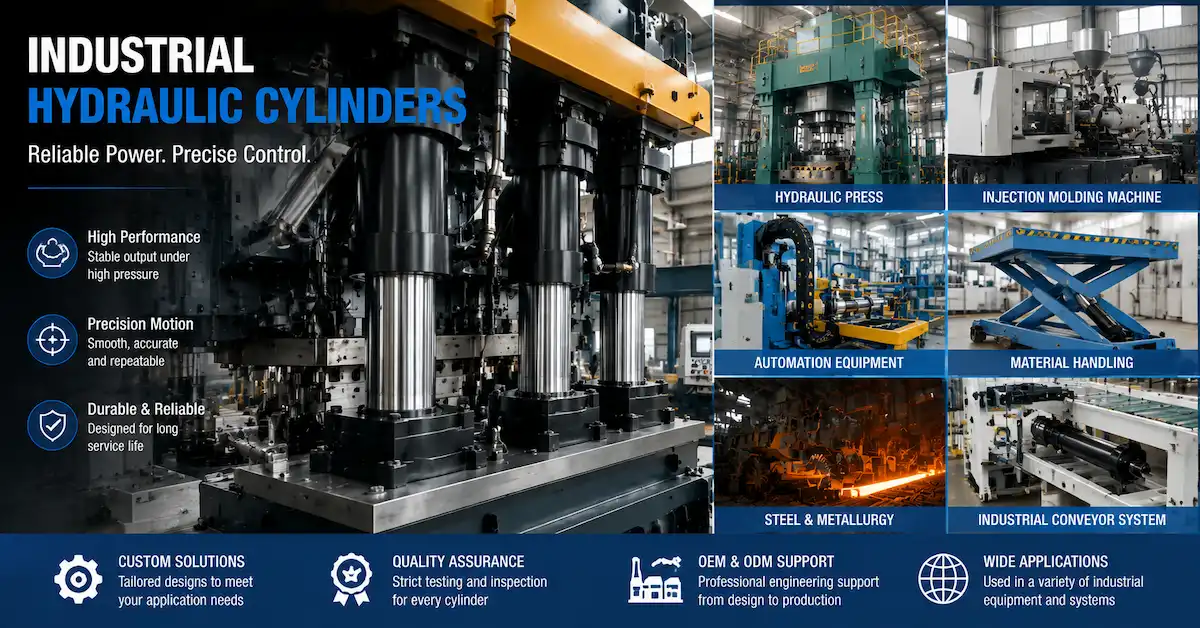
- Hydraulic presses
- Industrial equipment
- Material handling systems
- Mining machinery
For equipment owners, repair companies, and hydraulic distributors, replacing a cylinder is not simply buying a similar-looking product. The replacement cylinder must match the original machine requirements and working conditions.
A reliable hydraulic cylinder supplier should help customers confirm:
- Cylinder dimensions
- Working pressure
- Stroke length
- Bore and rod size
- Mounting structure
- Port thread
- Seal requirements
- Application environment
BLINCE provides hydraulic cylinder replacement solutions for construction machinery, industrial equipment, and custom hydraulic applications.
Explore BLINCE hydraulic products:
https://www.blincehydraulic.com/products
When Should You Replace a Hydraulic Cylinder?
Hydraulic cylinders are designed for long-term operation, but continuous load, contamination, improper maintenance, and harsh environments can eventually cause failure.
Common replacement signs include:
External Oil Leakage
Oil leakage around:
- Cylinder head
- Piston rod
- Sealing area
- Hydraulic ports
may indicate:
- Damaged seals
- Worn rod surface
- Excessive pressure
- Aging components
Small leaks can develop into larger failures if not addressed.
Reduced Hydraulic Force
A damaged cylinder may no longer provide enough force.
Symptoms include:
- Slow lifting
- Weak pushing force
- Load dropping
- Poor machine performance
Possible causes:
- Internal leakage
- Damaged piston seals
- Cylinder wear
- Incorrect hydraulic pressure
Damaged Piston Rod
The piston rod is one of the most important cylinder components.
Common problems:
- Scratches
- Corrosion
- Bending
- Surface wear
A damaged rod can quickly damage seals and cause continuous leakage.
Unstable Movement
A failing hydraulic cylinder may cause:
- Jerky movement
- Uneven speed
- Cylinder drifting
- Poor positioning accuracy
This is especially critical for:
- Industrial automation equipment
- Hydraulic presses
- Precision machinery
How to Select the Correct Hydraulic Cylinder Replacement?
Choosing a replacement cylinder requires accurate technical matching.
Confirm Bore Diameter and Rod Diameter
The bore and rod size determine:
- Output force
- Stability
- Load capacity
Incorrect dimensions may cause:
- Insufficient force
- Installation problems
- Reduced service life
Match Stroke Length
Stroke length determines the cylinder movement distance.
Buyers should confirm:
- Fully retracted length
- Fully extended length
- Required working range
A wrong stroke can prevent the machine from completing its designed movement.
Check Mounting Dimensions
Mounting compatibility is one of the most common replacement problems.
Confirm:
- Pin diameter
- Mounting hole size
- Clevis dimensions
- Flange structure
- Installation angle
Even a small dimensional difference may require machine modification.
Confirm Working Pressure
Replacement cylinders must match the hydraulic system pressure.
Important information:
- Normal operating pressure
- Maximum pressure
- Shock load conditions
Using a cylinder with insufficient pressure capability may create safety risks.
Check Port Size and Thread Type
Hydraulic connection standards vary.
Common options include:
- BSP
- NPT
- SAE
- Metric
Incorrect ports may cause:
- Leakage
- Additional adapters
- Installation delays
OEM Replacement vs Custom Hydraulic Cylinder Replacement
When replacing a hydraulic cylinder, buyers usually have two options.
| Option | Advantages | Suitable For |
|---|---|---|
| OEM Replacement Cylinder | Faster matching, original specifications | Standard equipment repair |
| Custom Replacement Cylinder | Optimized dimensions and performance | Special machines and discontinued parts |
Custom replacement is useful when:
- Original cylinder is unavailable
- Equipment has been modified
- Better performance is required
- Special environment exists
A professional hydraulic cylinder supplier can help determine the best replacement solution.
Common Hydraulic Cylinder Replacement Applications
Construction Machinery Replacement
Used for:
- Excavator boom cylinders
- Bucket cylinders
- Arm cylinders
- Loader lift cylinders
Requirements:
- High load resistance
- Shock protection
- Reliable sealing
Agricultural Machinery Replacement
Used for:
- Tractor cylinders
- Harvester cylinders
- Attachment cylinders
Requirements:
- Durable operation
- Outdoor resistance
- Stable performance
Industrial Equipment Replacement
Used for:
- Hydraulic presses
- Manufacturing machines
- Automation equipment
Requirements:
- Precision movement
- Repeatability
- Long service life
Port and Heavy Equipment Replacement
Used for:
- Cranes
- Lifting systems
- Material handling equipment
Requirements:
- Heavy load capability
- Corrosion resistance
What Information Should You Provide for Hydraulic Cylinder Replacement?
To get an accurate replacement recommendation, provide:
| Information | Example |
|---|---|
| Machine Type | Excavator, loader, press machine |
| Cylinder Location | Boom, bucket, lifting, steering |
| Old Cylinder Photos | Product identification |
| Bore Diameter | mm |
| Rod Diameter | mm |
| Stroke Length | mm |
| Retracted Length | mm |
| Extended Length | mm |
| Mounting Dimensions | Pin, flange, clevis |
| Port Thread | BSP, NPT, SAE |
| Working Pressure | MPa/bar |
| Quantity | Single replacement or batch order |
Providing complete information helps suppliers avoid incorrect replacement recommendations.
Common Mistakes When Buying Replacement Hydraulic Cylinders
Choosing Only by Appearance
Two cylinders may look similar but have different:
- Pressure ratings
- Stroke lengths
- Mounting sizes
- Seal systems
Ignoring Working Environment
A cylinder used in:
- Construction sites
- Mines
- Ports
- Outdoor environments
requires different protection compared with indoor equipment.
Not Checking Hydraulic System Compatibility
The cylinder works together with:
- Pumps
- Valves
- Hoses
- Hydraulic oil
Incorrect matching can affect the entire system.
Buying Only Based on Price
Low-cost replacement cylinders may create:
- Frequent leakage
- Short service life
- More downtime
- Higher maintenance costs
The best replacement solution balances:
- Quality
- Compatibility
- Service life
- Cost efficiency
Why Choose BLINCE for Hydraulic Cylinder Replacement?
BLINCE provides hydraulic cylinder replacement solutions for customers who need reliable alternatives for existing equipment.
Advantages include:
- Replacement cylinder matching
- OEM hydraulic cylinder support
- Custom cylinder solutions
- Technical parameter confirmation
- Hydraulic system knowledge
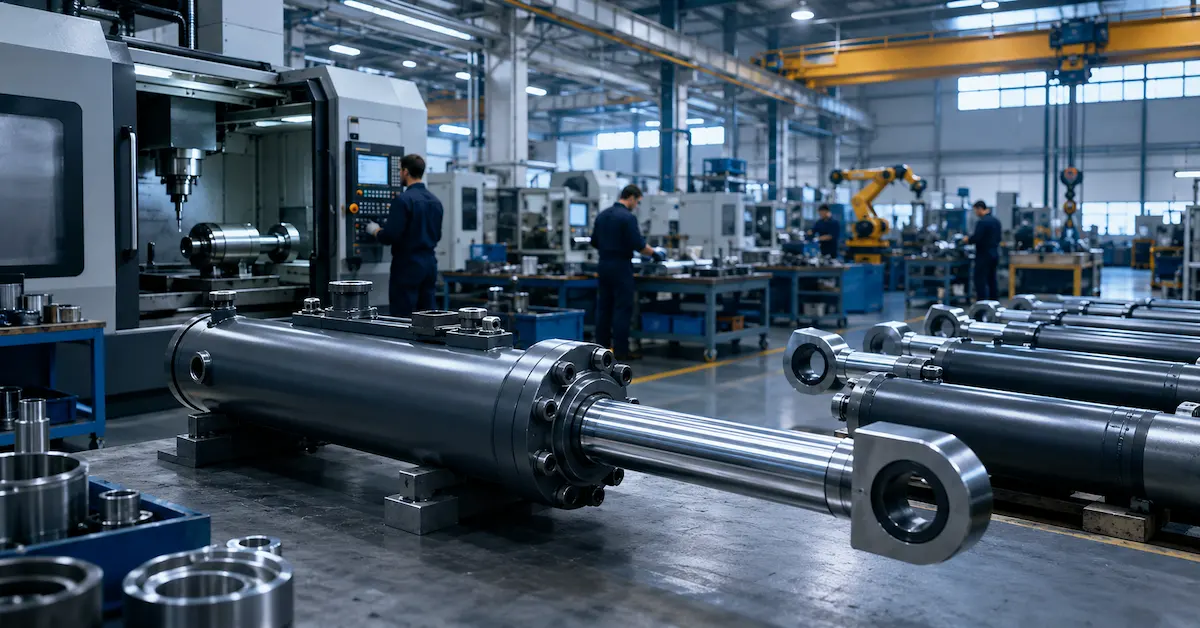
- Manufacturing capability
- Quality testing process
BLINCE can help customers replace cylinders for:
- Construction machinery
- Agricultural equipment
- Industrial systems
- Material handling equipment
- Heavy-duty machinery
Manufacturing capabilities:
https://www.blincehydraulic.com/about-us#manufacturing-capabilities
How to Request a Hydraulic Cylinder Replacement Quote?
For faster quotation, send:
- Machine model
- Old cylinder photos
- Cylinder dimensions
- Bore and rod size
- Stroke length
- Mounting details
- Port information
- Working pressure
- Quantity requirement
Customers can send replacement requirements through BLINCE contact page:
https://www.blincehydraulic.com/contact-us
FAQ
What is hydraulic cylinder replacement?
Hydraulic cylinder replacement means replacing a damaged, worn, or unavailable cylinder with a suitable new cylinder that matches the machine requirements.
How do I know if my hydraulic cylinder needs replacement?
Common signs include oil leakage, weak force, unstable movement, rod damage, and inability to hold load.
Can I replace a hydraulic cylinder with a different model?
Yes, but the replacement cylinder must match pressure, dimensions, stroke, mounting, ports, and application requirements.
Can BLINCE provide replacement hydraulic cylinders?
Yes. BLINCE can recommend replacement cylinders based on photos, drawings, dimensions, and equipment information.
What information is needed for cylinder replacement?
Provide machine model, old cylinder photos, bore, rod, stroke, mounting dimensions, pressure, and port details.
Can discontinued cylinders be replaced?
Yes. Custom replacement cylinders can often be produced based on measurements, drawings, or original specifications.
How long does hydraulic cylinder replacement take?
Delivery time depends on cylinder complexity, customization requirements, quantity, and production schedule.
Can replacement cylinders improve machine performance?
Yes. A properly selected replacement cylinder can improve reliability, reduce leakage, and restore machine performance.
Conclusion
Choosing the right hydraulic cylinder replacement solution helps equipment owners reduce downtime, restore machine performance, and avoid repeated failures.
A successful replacement requires more than matching appearance. Buyers should confirm cylinder dimensions, pressure rating, stroke length, mounting design, ports, sealing requirements, and working environment.
BLINCE supports customers with hydraulic cylinder replacement, custom solutions, technical matching, and complete hydraulic component support.
Send your old cylinder photos, machine information, technical specifications, and quantity requirements to BLINCE for a suitable replacement hydraulic cylinder solution.