


What Should You Expect From a Hydraulic System Manufacturer?
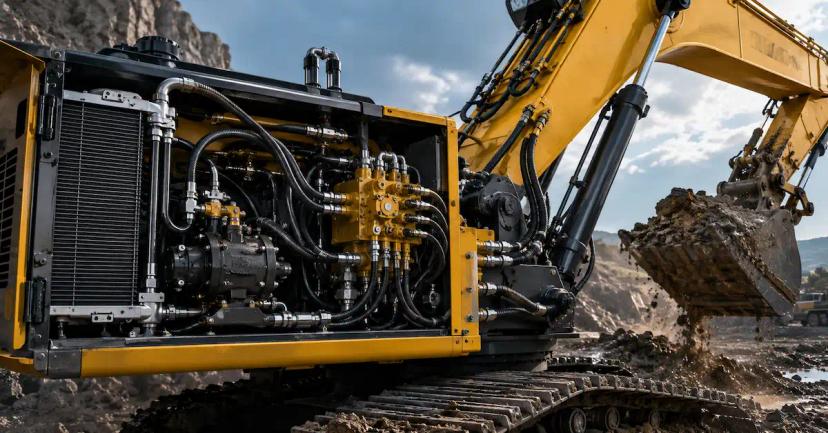
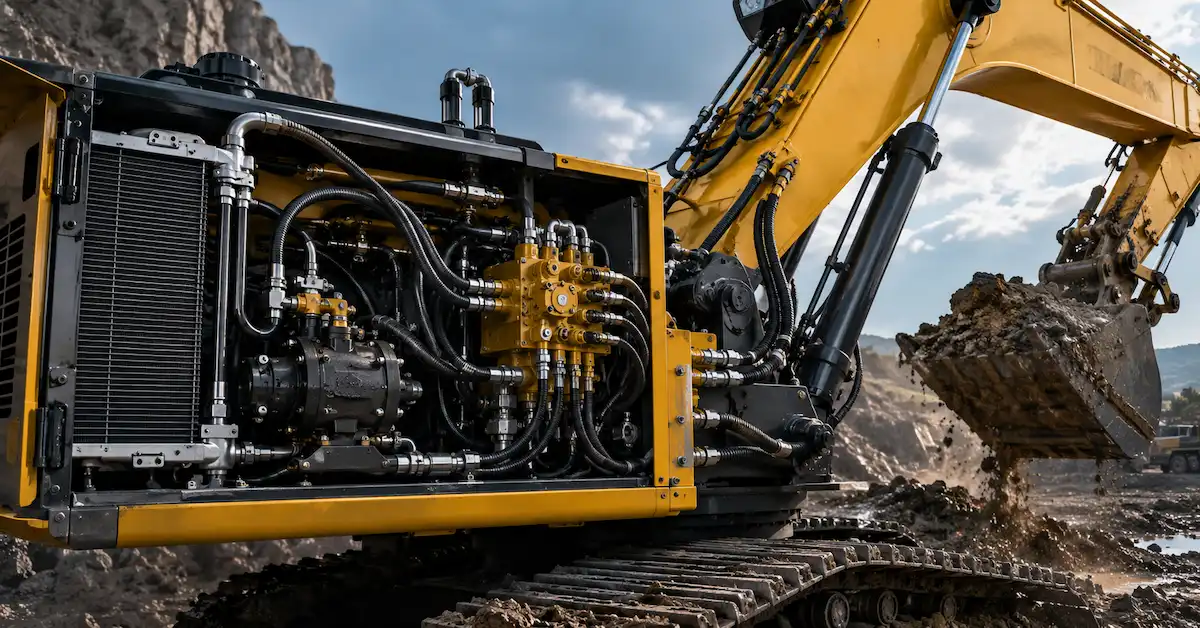
A hydraulic system manufacturer should do more than supply individual hydraulic components. For OEM machinery and industrial equipment, the real challenge is making pumps, motors, valves, cylinders, hoses, cooling devices, filtration, pressure settings, and control logic work together as one reliable system.
A component can meet its catalog specification and still perform poorly when installed in the wrong system. Excessive pressure drop, insufficient flow, incorrect displacement, poor heat dissipation, incompatible ports, contamination, and incorrectly sized actuators can all reduce machine performance.
For this reason, professional buyers should evaluate a hydraulic supplier from a system-level perspective, not simply ask which company offers the lowest component price.
BLINCE supplies a broad hydraulic product portfolio covering hydraulic motors, hydraulic pumps, hydraulic valves, hydraulic cylinders, hydraulic coolers, hydraulic hoses, steering control units, fittings, and custom hydraulic systems. The company positions these products for mobile machinery, agricultural equipment, industrial engineering, offshore applications, energy technology, and tunneling equipment.
Who Needs a Hydraulic System Manufacturer?
Not every buyer has the same hydraulic requirements.
Understanding the buyer type is the first step in selecting the right manufacturing partner.
OEM Machinery Manufacturers
OEM equipment manufacturers usually require more than a catalog component.
Their concerns may include:
- Hydraulic architecture compatibility
- Stable component specifications
- Custom shafts, ports, mounting or interfaces
- Repeatable quality across production batches
- Technical documentation
- OEM development support
- Long-term replacement availability
- Cost control throughout the equipment lifecycle
Typical equipment includes excavators, loaders, agricultural machinery, mining equipment, cranes, material handling equipment, road machinery, drilling machines, and specialized industrial equipment.
Hydraulic System Integrators
System integrators need to match multiple components into a working hydraulic circuit.
Their questions often include:
- Is the pump flow sufficient?
- Can the selected motor produce enough torque?
- Is the cylinder bore suitable for the required force?
- Can the valve handle maximum system flow?
- Will pressure losses create excess heat?
- Does the cooler have enough thermal capacity?
- Are fittings and hose ratings compatible with system pressure?
For these buyers, working with a supplier that covers several hydraulic component categories can simplify technical communication.
Hydraulic Distributors and Importers
Distributors normally focus on:
- Product range
- Stable supply
- Model coverage
- Replacement compatibility
- OEM branding
- Technical documentation
- Quality consistency
- After-sales support
A broad product portfolio can also allow distributors to consolidate sourcing instead of purchasing pumps, motors, valves, cylinders, and hoses from several unrelated suppliers.
Repair and Maintenance Companies
Maintenance buyers are often solving an urgent problem rather than designing a new machine.
They may need:
- Replacement hydraulic motors
- Replacement pumps
- Hydraulic pump cartridges
- Custom cylinders
- Valves with matching flow and ports
- Compatible shafts and flanges
- Technical assistance identifying discontinued parts
For these buyers, dimensional and functional compatibility can be more important than the original model number.
Why System-Level Component Matching Matters
A reliable hydraulic system is created by matching pressure, flow, displacement, force, torque, speed, temperature, fluid cleanliness, and control requirements.
Buying components independently without checking these relationships creates unnecessary risk.
Pump Selection Determines Flow Availability
The hydraulic pump supplies flow to the system.
Depending on the application, a system may use:
- Gear pumps
- Piston pumps
- Vane pumps
- Variable displacement pumps
- Fixed displacement pumps
BLINCE's hydraulic pump range includes gear pumps, piston pumps, hydraulic pump cartridges, and vane pumps.
A pump should not be selected by maximum pressure alone.
Engineers must also consider:
- Displacement
- Required flow
- Operating speed
- Continuous pressure
- Peak pressure
- Control method
- Rotation
- Fluid viscosity
- Duty cycle
- System efficiency
An oversized pump may create unnecessary energy loss and heat, while an undersized pump may produce slow actuator response or insufficient motor speed.
Hydraulic Motors Must Match Torque and Speed
A hydraulic motor converts hydraulic energy into rotary mechanical output.
BLINCE's current motor categories include:
- Radial piston motors
- Axial piston motors
- Gear motors
- Orbital motors
- Travel motors
The correct motor depends on the application.
For example, low-speed, high-torque machinery may require a very different motor architecture from a higher-speed industrial drive.
Important parameters include:
- Displacement
- Required torque
- Operating pressure
- Oil flow
- Speed range
- Starting torque
- Shaft design
- Flange
- Port arrangement
- Rotation direction
- External loads
Choosing the wrong displacement can produce either insufficient torque or unsuitable operating speed.
Valves Control the Entire Machine Response
A hydraulic system manufacturer must also consider how oil is controlled.
BLINCE's hydraulic valve portfolio covers module valves, flow control valves, directional control valves, logic valves, and proportional electro-hydraulic controls.
Valve selection affects:
- Direction
- Actuator speed
- Pressure control
- Sequence
- Machine response
- Operator control
- Safety behavior
Engineers should confirm:
- Rated flow
- Maximum pressure
- Number of sections
- Spool function
- Actuation method
- Port size
- Thread standard
- Voltage where applicable
- Control accuracy
A valve that is too small can generate excessive pressure drop and heat. A valve with the wrong spool configuration may cause incorrect actuator behavior even when the pump and actuator are properly sized.
Cylinders Must Be Sized for Force and Geometry
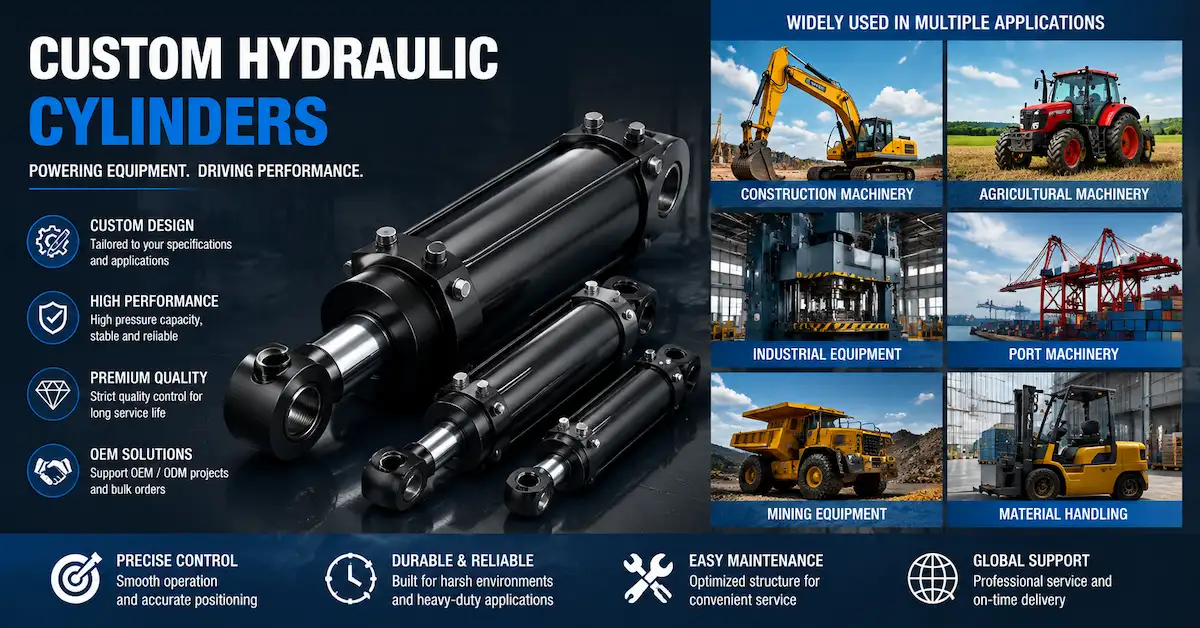
A hydraulic cylinder converts fluid power into linear force and motion.
Cylinder selection should consider:
- Bore diameter
- Rod diameter
- Stroke
- System pressure
- Push and pull force
- Mounting
- Side load
- Buckling risk
- Seal arrangement
- Cushioning
- Port position
- Working temperature
- Corrosive or dirty environments
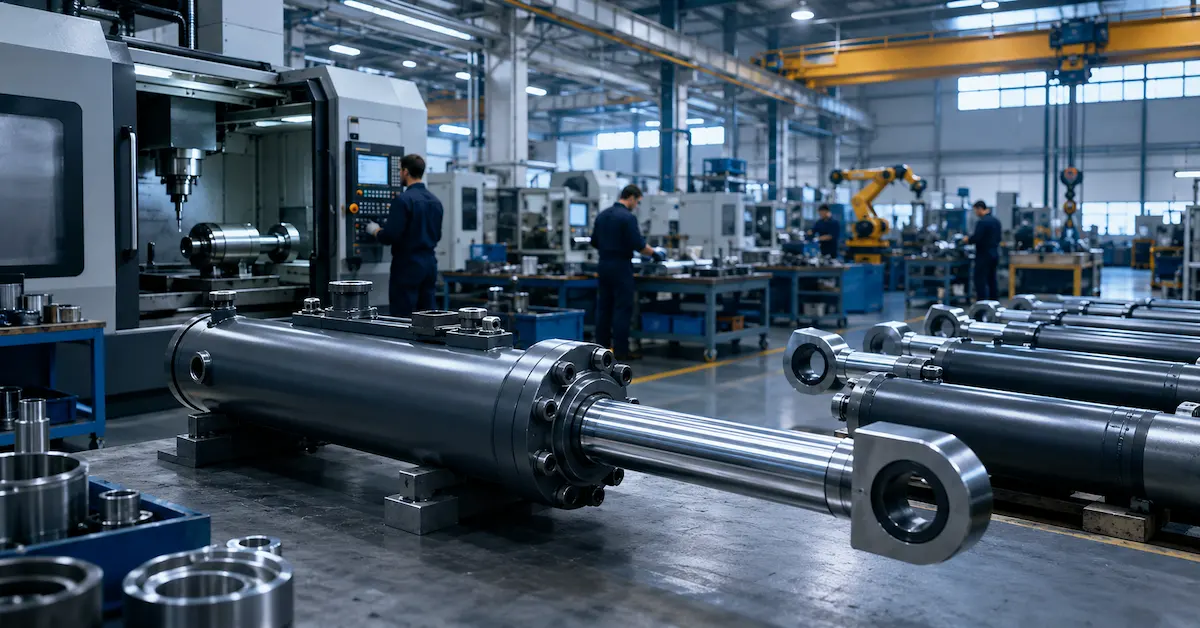
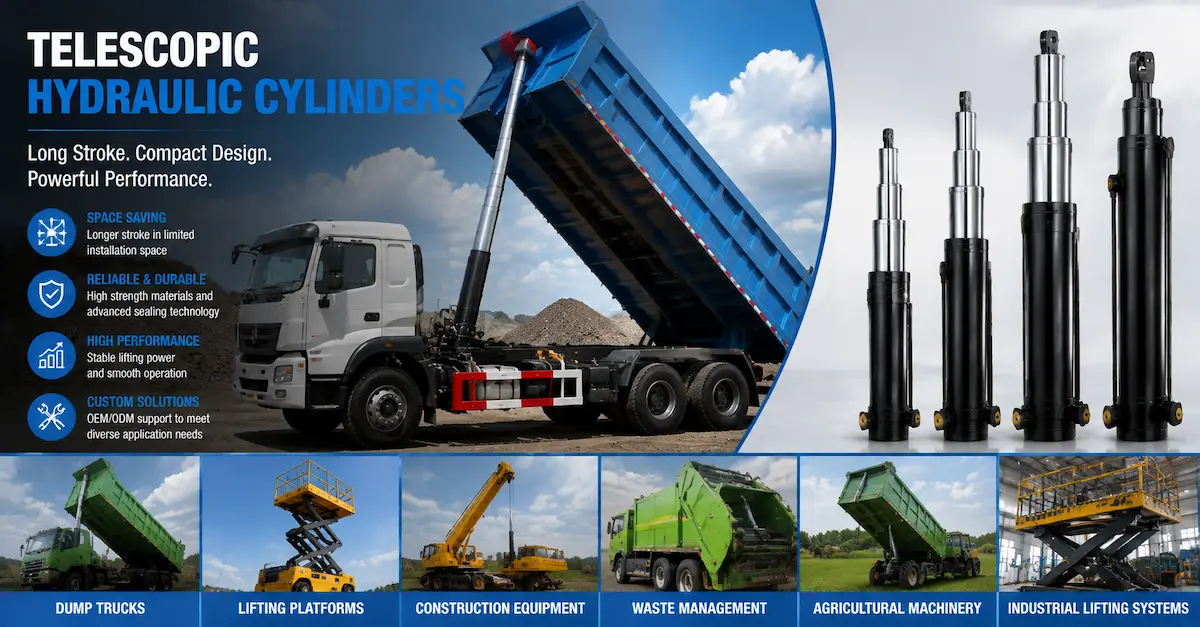
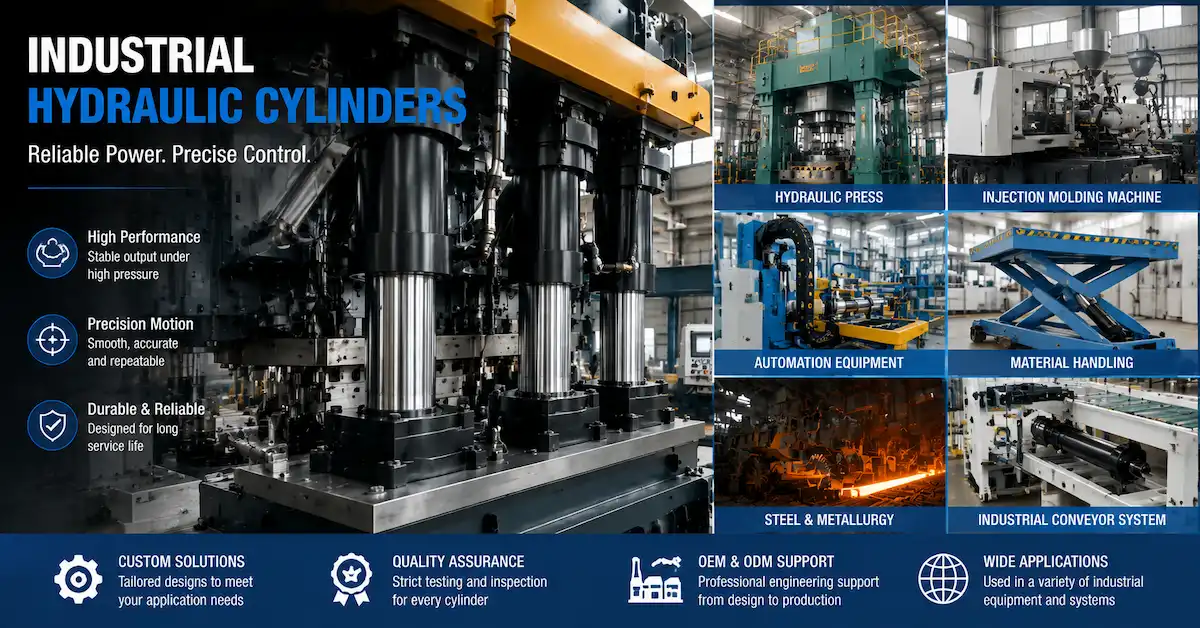
BLINCE presents its hydraulic cylinder range as high-strength, precise-motion products with customization options for different machinery requirements.
For OEM equipment, dimensional compatibility can be just as important as pressure rating.
Key Hydraulic System Parameters Buyers Should Confirm
Before asking a hydraulic system manufacturer for a quotation, buyers should prepare as much technical information as possible.
| Parameter | What to Confirm | Why It Matters |
|---|---|---|
| Working pressure | Continuous and peak pressure | Determines component load and safety margin |
| Flow rate | Required L/min | Controls actuator and motor speed |
| Pump displacement | cm³/rev | Affects available flow |
| Motor displacement | cm³/rev | Influences torque and speed |
| Cylinder bore | Diameter | Determines output force |
| Cylinder stroke | Required movement | Determines machine travel |
| Valve flow | Maximum circuit flow | Prevents excessive pressure drop |
| Motor speed | Required RPM | Helps size motor and pump |
| Oil temperature | Normal and maximum | Influences viscosity and component life |
| Ambient temperature | Working environment | Affects cooling and fluid selection |
| Port/thread | SAE, BSP, NPT, metric, etc. | Determines connection compatibility |
| Duty cycle | Intermittent or continuous | Influences thermal and durability requirements |
| Application | Machine and operating conditions | Determines real-world component requirements |
A good RFQ normally contains more than a model number.
Drawings, photos, hydraulic schematics, existing part numbers, dimensional information, operating pressure, flow, speed, load, duty cycle, environment, and annual quantity can significantly improve quotation accuracy.
A Complete Hydraulic System Is More Than Four Core Components
Pump, motor, valve, and cylinder selection receives most of the attention, but supporting components can determine whether the finished machine remains reliable.
Hydraulic Cooling
Heat is one of the major system-level issues that cannot be evaluated by looking at individual components alone.
Hydraulic systems generate heat through:
- Internal leakage
- Pressure losses
- Throttling
- Mechanical inefficiency
- Continuous high-load operation
- Improper component sizing
A suitable hydraulic cooler helps stabilize oil temperature and protect system performance. BLINCE describes its cooler range as solutions for heat dissipation and oil-temperature control.
Cooling should therefore be evaluated according to actual thermal load rather than selecting a cooler simply by physical size.
Hydraulic Hoses and Connections
Hoses are part of the pressure circuit and should never be treated as minor accessories.
Selection must consider:
- Working pressure
- Burst pressure
- Inner diameter
- Oil compatibility
- Temperature
- Bend radius
- Abrasion
- Reinforcement
- Fittings
- Routing
BLINCE's hydraulic hose range is positioned for high-pressure hydraulic applications requiring flexibility and service durability.
The safety consequences of poor hose or connection selection can be serious. OSHA documents hazards involving high-pressure hydraulic fluid, including injection injuries and fire risks from released hydraulic oil mist. Buyers and maintenance teams should therefore follow suitable hydraulic safety procedures and applicable machine standards. See the OSHA Hydraulic Systems Modifications bulletin for additional safety context.
What Standards Should a Hydraulic System Manufacturer Understand?
For machinery applications, hydraulic system design is not only a performance issue.
It is also a safety and engineering-control issue.
One important reference is ISO 4413:2010, Hydraulic fluid power — General rules and safety requirements for systems and their components.
ISO states that the standard specifies general rules and safety requirements for hydraulic fluid-power systems and components used on machinery and addresses significant hazards associated with their intended use.
OEM buyers should therefore evaluate whether a supplier understands:
- Pressure limitations
- Component ratings
- Safe system layout
- Hose and fitting suitability
- Hydraulic leakage risks
- Maintenance access
- System testing
- Documentation
- Relevant regional standards
Certification alone does not replace good engineering, but a disciplined quality and standards framework reduces avoidable project risk.
How to Evaluate a Hydraulic System Manufacturer
A supplier evaluation should examine both manufacturing capability and engineering communication.
1. Check the Product Portfolio
A supplier with multiple related product categories may be better positioned to identify compatibility issues.
BLINCE currently covers:
| Component Category | Typical System Function |
| Hydraulic pump | Creates hydraulic flow |
| Hydraulic motor | Produces rotary motion |
| Hydraulic valve | Controls pressure, flow and direction |
| Hydraulic cylinder | Produces linear force |
| Hydraulic cooler | Controls oil temperature |
| Hydraulic hose | Transfers hydraulic fluid |
| Steering control unit | Controls hydraulic steering functions |
| Fittings | Connect system components |
You can review the complete BLINCE hydraulic product range.
2. Evaluate Engineering Support
Ask whether the supplier can review:
- Drawings
- Hydraulic schematics
- Existing models
- System pressure
- Flow
- Motor torque
- Cylinder force
- Installation dimensions
- Mounting restrictions
- Environmental conditions
The more technically complex the project, the more important engineering communication becomes.
3. Examine Manufacturing and Testing Capability
A serious hydraulic system supplier should be able to explain how components are:
- Machined
- Assembled
- Inspected
- Pressure-tested
- Leakage-tested
- Performance-checked
According to BLINCE's company information, the business was established in 2004, has more than 20 years of industry experience, maintains R&D and testing capabilities, states compliance with ISO 9001 and CE standards, and reports 10 registered patents.
More information is available on the About BLINCE page.
4. Check Customization Capability
OEM hydraulic projects often require changes to standard catalog configurations.
Customization may involve:
- Displacement
- Shaft
- Flange
- Port
- Thread
- Rotation
- Valve configuration
- Cylinder bore
- Stroke
- Mounting
- Seal materials
- Hose length
- Fittings
- Cooling arrangement
A capable OEM hydraulic system manufacturer should first understand why the customization is required rather than simply agreeing to change dimensions.
5. Evaluate Replacement Compatibility
For maintenance projects, the key question may be:
Can the new component replace the existing one without creating another system problem?
Replacement evaluation should compare:
- Function
- Pressure
- Flow
- Displacement
- Dimensions
- Shaft
- Mounting
- Ports
- Rotation
- Control configuration
A similar-looking product is not necessarily hydraulically interchangeable.
Component Supplier vs Hydraulic System Manufacturer
The right choice depends on project complexity.
| Supplier Type | Best For | Main Advantage | Main Limitation |
| Single-component supplier | Known replacement parts | Simple sourcing | Limited system-level support |
| Hydraulic distributor | Standard components and local stock | Broad availability | Manufacturing customization may be limited |
| Hydraulic system manufacturer | OEM and engineering projects | Component matching and technical coordination | Requires detailed project information |
| Custom hydraulic partner | Special machinery | Application-specific engineering | Development may require more technical confirmation |
If you already have a fully validated design and simply need a standard replacement valve, a specialized component supplier may be sufficient.
If you are developing machinery, changing system architecture, replacing several interconnected components, or solving repeated reliability problems, a system-oriented hydraulic partner is usually more valuable.
Common Procurement Risks When Choosing a Hydraulic System Supplier
Buying by Maximum Pressure Only
Two products with the same pressure rating may have different displacement, flow capacity, control characteristics, mounting, efficiency, or duty-cycle suitability.
Ignoring Heat Generation
A machine can meet its force and speed requirements but still overheat because of excessive throttling, leakage, pressure loss, or poor cooler sizing.
Ignoring Contamination Control
Hydraulic components depend on controlled fluid cleanliness.
Contaminated oil can increase wear, damage sealing surfaces, reduce efficiency, and shorten service life.
For this reason, filtration strategy and maintenance access should be considered during system design rather than after failures occur.
Using Incorrect Hose or Thread Standards
BSP, NPT, SAE and metric connections are not automatically interchangeable.
Incorrect adapters or improvised connections increase leakage and maintenance risk.
Selecting Components Independently
A pump, valve, motor and cylinder may each be technically acceptable while still being poorly matched as a system.
System engineering must consider how their characteristics interact.
A Practical OEM Hydraulic System Development Process
A structured process helps reduce errors before production.
Step 1: Define the Machine Requirement
Provide:
- Machine type
- Required motion
- Load
- Force
- Torque
- Speed
- Duty cycle
- Working environment
Step 2: Confirm Hydraulic Parameters
Determine:
- Pressure
- Flow
- Pump displacement
- Motor displacement
- Cylinder dimensions
- Valve capacity
- Oil requirements
Step 3: Select and Match Components
Match pump, motor, valve, cylinder, cooler, hoses, and connections according to the complete circuit.
Step 4: Confirm Interfaces
Check:
- Shaft
- Flange
- Mounting
- Ports
- Threads
- Dimensions
- Rotation
- Electrical control where applicable
Step 5: Review Custom Requirements
Identify which parts can remain standard and which require OEM modification.
Using standard components where practical can simplify service and replacement, while customization should be reserved for genuine machine requirements.
Step 6: Manufacturing and Quality Control
Components should proceed through controlled manufacturing, assembly, inspection, and appropriate performance testing.
Step 7: Installation and Technical Support
A long-term supplier relationship should include technical communication for installation, troubleshooting, maintenance, and future replacement.
BLINCE's contact page specifically offers hydraulic solution consulting, technical support, and personalized service.
What Information Should You Send for a Hydraulic System Quote?
Providing better technical information usually leads to a more accurate proposal.
For a new OEM project, prepare:
- Equipment name
- Application
- Hydraulic schematic
- Required operating pressure
- Peak pressure
- Required flow
- Motor torque and speed
- Cylinder force and stroke
- Operating temperature
- Duty cycle
- Working environment
- Available installation space
- Required quantity
For replacement projects, add:
- Existing brand
- Model number
- Nameplate photo
- Product photos
- Installation dimensions
- Shaft dimensions
- Flange dimensions
- Port/thread specifications
- Drawings if available
You can send drawings and technical files directly through the BLINCE contact form.
Why Consider BLINCE for Hydraulic System and Component Projects?
BLINCE is based in Dongguan, China and states more than 20 years of hydraulic industry experience, R&D capability, testing equipment, ISO 9001 and CE compliance, and 10 registered patents.
Its main advantage for system-oriented buyers is the breadth of the hydraulic portfolio.
Customers can explore:
- Hydraulic Motors
- Hydraulic Pumps
- Hydraulic Valves
- Hydraulic Cylinders
- Hydraulic Coolers
- Hydraulic Hoses
The company also lists steering control units, fittings, and custom hydraulic systems within its wider product and solution portfolio.
For OEM manufacturers, distributors, maintenance companies, and system integrators, this creates the possibility of discussing multiple hydraulic requirements with one technical supplier rather than evaluating every component in isolation.
FAQ
What does a hydraulic system manufacturer do?
A hydraulic system manufacturer helps select, match, manufacture, or supply hydraulic components such as pumps, motors, valves, cylinders, hoses, coolers, and related controls according to machine pressure, flow, force, torque, speed, and working conditions.
What should I check before choosing a hydraulic system manufacturer?
Evaluate product range, engineering capability, manufacturing control, testing, quality systems, customization, replacement support, technical communication, and experience with your target application.
What information is needed to design a hydraulic system?
Important inputs include required pressure, flow, force, torque, speed, cylinder stroke, motor displacement, pump capacity, duty cycle, operating temperature, installation space, machine type, and hydraulic schematic.
Can one manufacturer supply pumps, motors, valves, and cylinders?
Some hydraulic suppliers specialize in one component category. BLINCE supplies hydraulic motors, pumps, valves, cylinders, coolers, hoses, and additional hydraulic components, which can support broader system matching requirements.
How do I know whether hydraulic components are compatible?
Compatibility requires checking operating pressure, flow, displacement, speed, dimensions, shaft, flange, port, thread, rotation, control logic, oil requirements, and application conditions.
Can a hydraulic system manufacturer customize components?
Yes, depending on its capabilities. OEM projects may require customized shafts, flanges, ports, displacement, cylinder dimensions, seals, mounting, valve configuration, hoses, fittings, or other interfaces.
Why does hydraulic oil temperature matter?
Excessive temperature can reduce oil viscosity, increase leakage, accelerate seal degradation, and reduce system efficiency. Pump efficiency, pressure losses, cooler sizing, duty cycle, and ambient conditions should therefore be evaluated together.
What is the difference between a hydraulic component supplier and a hydraulic system manufacturer?
A component supplier primarily sells individual products. A system-oriented manufacturer or solution provider also considers how components interact within the complete hydraulic circuit.
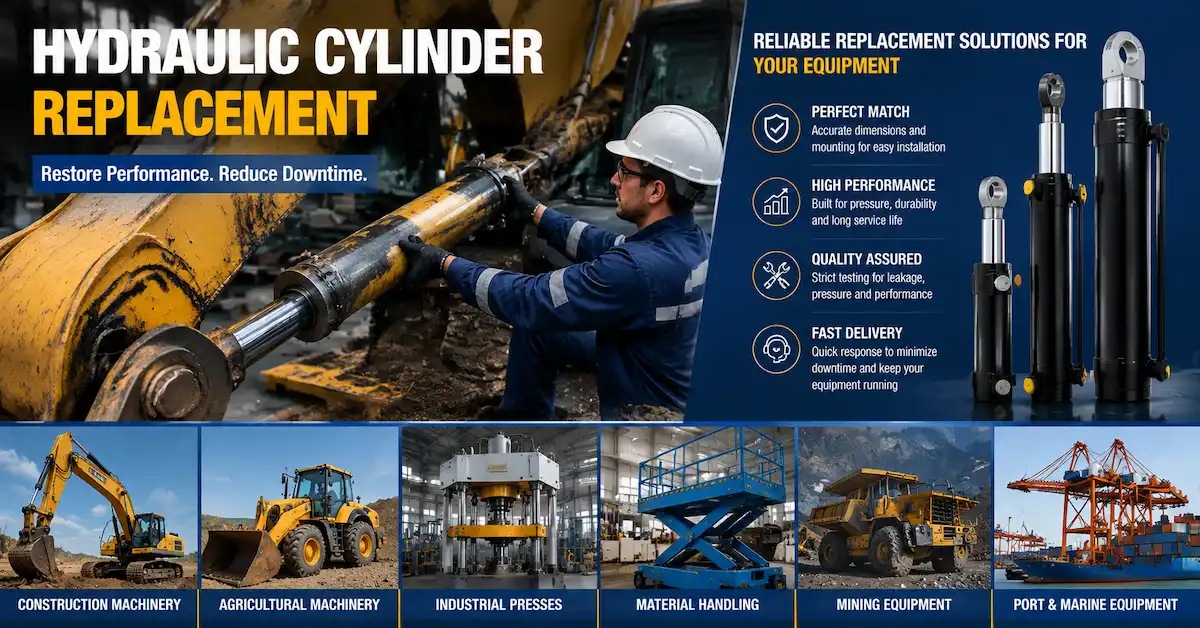
Can BLINCE help with replacement hydraulic components?
BLINCE provides multiple hydraulic component categories and technical support. For replacement evaluation, buyers should provide model numbers, drawings, photos, dimensions, pressure, flow, and machine application details.
How can I request a hydraulic system quotation from BLINCE?
Prepare your machine information, operating parameters, hydraulic schematic or drawings, required components, quantity, and application details, then submit them through the BLINCE Contact Us page.
Conclusion
Choosing a hydraulic system manufacturer should be treated as an engineering and supply-chain decision rather than a simple component-price comparison.
Reliable hydraulic machinery depends on how well pumps, motors, valves, cylinders, hoses, cooling devices, fluid conditions, pressure, flow, and control requirements work together.
For OEM machinery manufacturers, system integrators, distributors, and maintenance buyers, the strongest supplier is one that can understand the application, identify compatibility risks, provide suitable components, support customization, maintain quality control, and assist with long-term technical requirements.
BLINCE provides a broad portfolio of hydraulic motors, pumps, valves, cylinders, coolers, hoses, and related hydraulic solutions backed by manufacturing, R&D, testing, and technical-support capabilities.
If you are developing a new machine or replacing an existing hydraulic system, send your hydraulic schematic, pressure, flow, torque, speed, cylinder requirements, component models, drawings, application conditions, and expected quantity to BLINCE Hydraulic for technical evaluation and quotation.