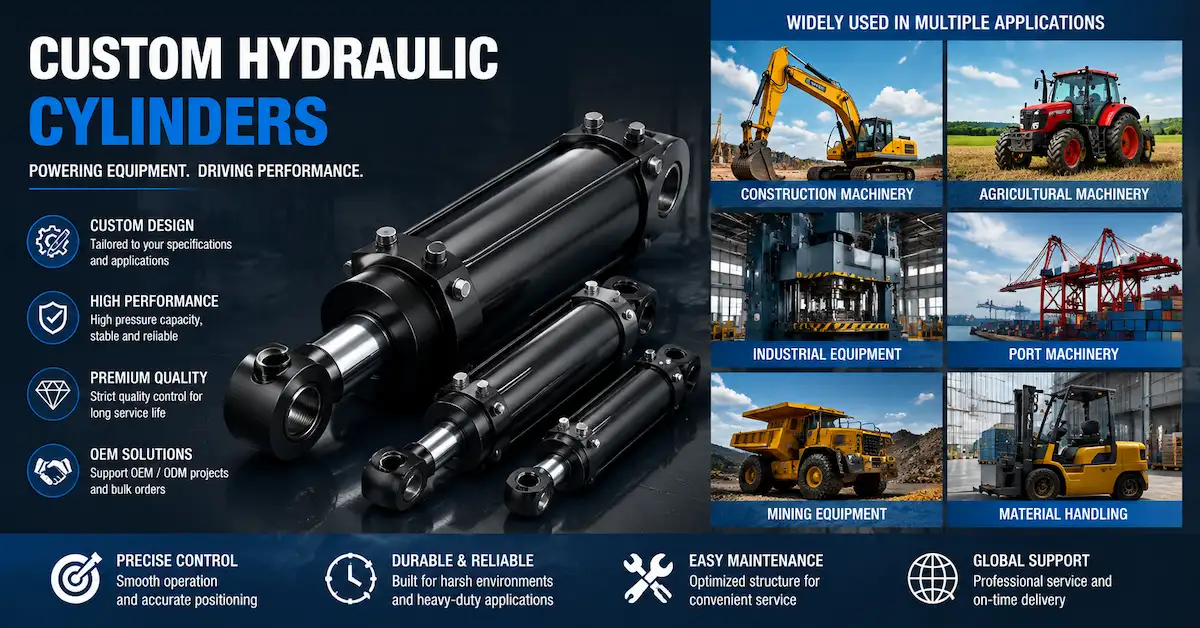



An industrial hydraulic cylinder is a key actuator used in industrial machinery to convert hydraulic energy into controlled linear movement. It provides pushing, pulling, lifting, pressing, clamping, and positioning force for a wide range of industrial applications.
Unlike mobile machinery cylinders that often focus on impact resistance and outdoor durability, industrial hydraulic cylinders usually require:
- High precision
- Stable repeated movement
- Long service life
- Low leakage
- Reliable performance under continuous operation
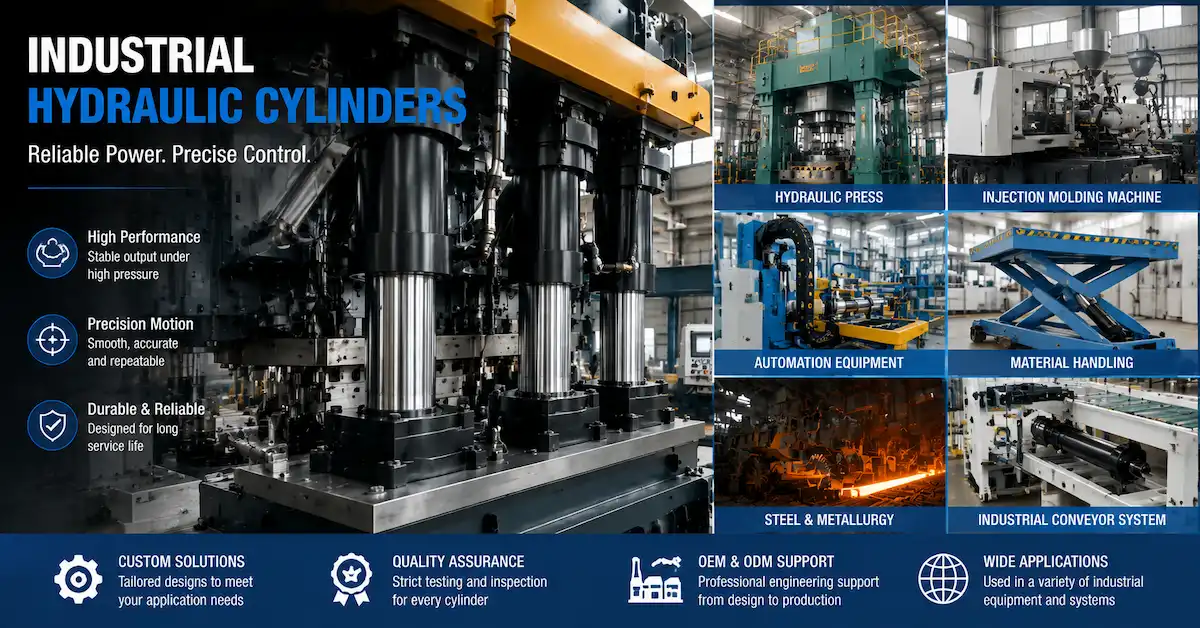
They are widely used in:
- Hydraulic presses
- Metal forming equipment
- Injection molding machines
- Automation systems
- Material handling equipment
- Steel and metallurgical machinery
- Production lines
- Special industrial equipment
For industrial equipment manufacturers and hydraulic system integrators, selecting the correct cylinder directly affects machine accuracy, production efficiency, maintenance cost, and equipment reliability.
BLINCE provides hydraulic cylinder solutions for industrial applications, supporting OEM projects, custom requirements, and complete hydraulic system matching.
Explore BLINCE hydraulic products:
https://www.blincehydraulic.com/products
What Is an Industrial Hydraulic Cylinder?
An industrial hydraulic cylinder is a hydraulic actuator designed for industrial equipment where controlled linear motion and reliable operation are required.
It consists mainly of:
- Cylinder barrel
- Piston
- Piston rod
- Seal system
- Guide components
- End caps
- Mounting structure
During operation, hydraulic oil enters the cylinder chamber and creates pressure that moves the piston and rod.
Industrial hydraulic cylinders are commonly designed according to:
- Required force
- Stroke length
- Working pressure
- Operating speed
- Installation space
- Duty cycle
- Environmental conditions
Compared with general-purpose cylinders, industrial cylinders often require more attention to precision, repeatability, and service life.
Why Industrial Equipment Needs High-Quality Hydraulic Cylinders
Industrial machines often operate for long periods with repeated cycles. A cylinder failure can interrupt production and increase maintenance costs.
Poor-quality cylinders may cause:
- Oil leakage
- Unstable movement
- Reduced pressing force
- Slow response
- Seal failure
- Production interruptions
- Increased downtime
For example:
A hydraulic press requires stable force output.
An automation system requires precise positioning.
A plastic processing machine requires consistent repeated movement.
A steel processing system requires high load capability.
Therefore, industrial hydraulic cylinders must be selected according to actual working conditions rather than only size or price.
Common Applications of Industrial Hydraulic Cylinders
Hydraulic Press Equipment
Hydraulic cylinders are widely used in:
- Metal forming presses
- Forging machines
- Compression equipment
- Punching systems
Requirements:
- High force output
- Stable pressure holding
- Strong structural design
- Long operating life
Injection Molding Machines
Industrial hydraulic cylinders support:
- Mold opening and closing
- Injection movement
- Clamping operations
Requirements:
- Precise movement
- Smooth operation
- Reliable sealing
Automation and Manufacturing Systems
Industrial cylinders are used in:
- Assembly lines
- Positioning systems
- Clamping devices
- Robotic equipment
Requirements:
- Repeatability
- Accurate positioning
- Fast response
Steel and Metallurgical Equipment
Applications include:
- Rolling equipment
- Material positioning systems
- Heavy processing machinery
Requirements:
- High pressure resistance
- Heat resistance
- Heavy-duty performance
Material Handling Equipment
Applications include:
- Lifting platforms
- Conveyors
- Industrial handling systems
Requirements:
- Stable lifting
- Load holding
- Safety performance
Key Parameters for Selecting an Industrial Hydraulic Cylinder
Before purchasing an industrial hydraulic cylinder, buyers should confirm:
| Parameter | Importance |
|---|---|
| Bore Diameter | Determines output force |
| Rod Diameter | Determines strength and stability |
| Stroke Length | Defines movement distance |
| Working Pressure | Determines load capability |
| Operating Speed | Affects machine efficiency |
| Duty Cycle | Determines durability requirements |
| Mounting Design | Ensures equipment compatibility |
| Port Size | Ensures hydraulic connection |
| Seal Material | Controls leakage and service life |
| Temperature Range | Determines component selection |
| Environment | Determines protection requirements |
A professional supplier should evaluate the entire application instead of recommending only a standard cylinder model.
Industrial Hydraulic Cylinder Types
Different industrial systems require different cylinder structures.
| Cylinder Type | Features | Applications |
|---|---|---|
| Tie-Rod Hydraulic Cylinder | Easy maintenance and modular design | Industrial machinery |
| Welded Hydraulic Cylinder | Strong structure and compact design | Heavy industrial equipment |
| Compact Hydraulic Cylinder | Space-saving design | Automation equipment |
| Custom Hydraulic Cylinder | Application-specific design | OEM industrial systems |
| High Pressure Hydraulic Cylinder | Designed for demanding loads | Presses and heavy equipment |
The correct cylinder type depends on:
- Force requirements
- Installation space
- Working frequency
- Pressure level
- Maintenance expectations
How to Choose an Industrial Hydraulic Cylinder Supplier?
Selecting the right supplier is important for long-term equipment reliability.
Evaluate Engineering Capability
A professional supplier should understand:
- Hydraulic system requirements
- Load conditions
- Cylinder structure
- Material selection
- Seal solutions
Engineering support helps reduce design mistakes before production.
Check Manufacturing Capability
A reliable supplier should have:
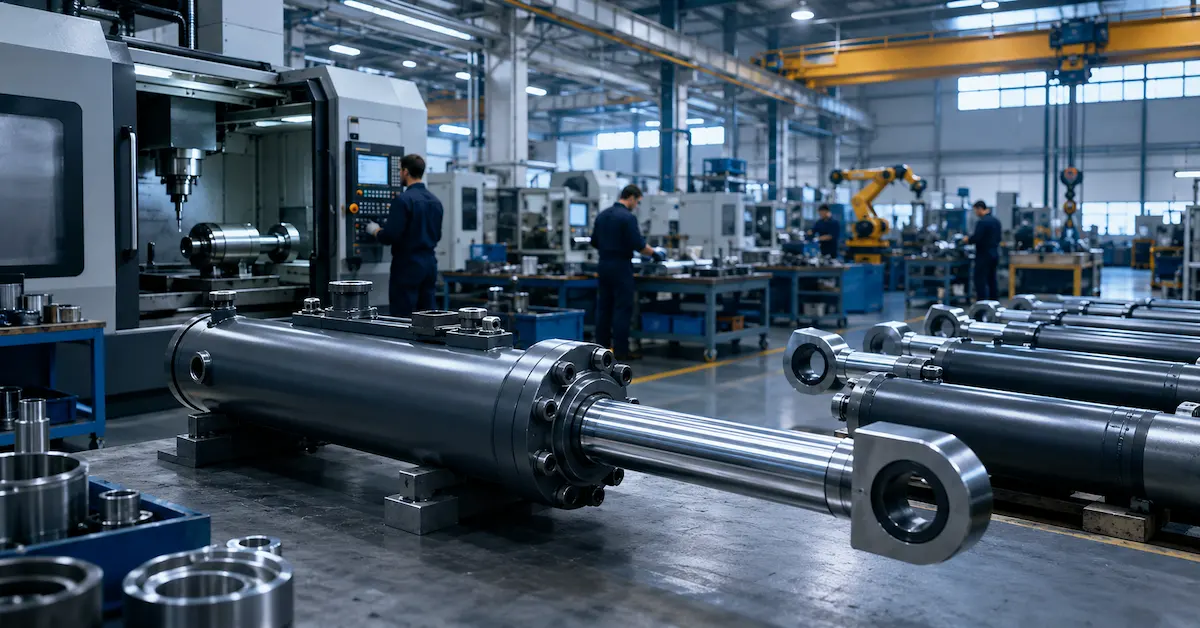
- CNC machining capability
- Welding capability
- Surface treatment process
- Assembly control
- Pressure testing equipment
Manufacturing accuracy directly affects:
- Leakage performance
- Movement stability
- Service life
BLINCE supports hydraulic component manufacturing and quality control.
Manufacturing capabilities:
https://www.blincehydraulic.com/about-us#manufacturing-capabilities
Confirm Quality Control Process
Important inspection items include:
| Inspection Item | Purpose |
|---|---|
| Dimension Inspection | Confirm design accuracy |
| Pressure Test | Verify safety |
| Leakage Test | Prevent hydraulic failure |
| Movement Test | Ensure smooth operation |
| Surface Inspection | Check rod quality |
| Assembly Inspection | Confirm reliability |
Quality control is especially important for industrial equipment because downtime can create significant production losses.
Custom Industrial Hydraulic Cylinder Solutions
Many industrial machines require customized cylinders.
Customization options include:
Mechanical Design
- Bore diameter
- Rod diameter
- Stroke length
- Mounting structure
Hydraulic Design
- Working pressure
- Port location
- Seal system
- Connection type
Environmental Requirements
- High temperature resistance
- Corrosion protection
- Dust resistance
- Special coatings
A custom hydraulic cylinder manufacturer can help optimize the cylinder according to the machine application.
Industrial Hydraulic Cylinder OEM Projects
OEM customers often require:
- Engineering cooperation
- Drawing confirmation
- Prototype development
- Sample testing
- Batch production
- Quality documentation
A reliable OEM supplier should support the complete process from design to delivery.
BLINCE provides OEM hydraulic cylinder support for:
- Machine manufacturers
- Equipment builders
- Hydraulic system integrators
- Industrial distributors
What Information Should You Send for a Quotation?
To receive an accurate quotation for an industrial hydraulic cylinder, provide:
| Information | Example |
|---|---|
| Equipment Type | Press machine, automation system, production line |
| Cylinder Application | Pressing, lifting, positioning, clamping |
| Bore Diameter | mm |
| Rod Diameter | mm |
| Stroke Length | mm |
| Working Pressure | MPa/bar |
| Operating Speed | mm/s |
| Duty Cycle | Hours or cycles per day |
| Mounting Type | Flange, clevis, custom |
| Port Thread | BSP, NPT, SAE |
| Working Environment | Temperature, dust, humidity |
| Quantity | Prototype or batch order |
Customers can send technical requirements through BLINCE contact page:
https://www.blincehydraulic.com/contact-us
Why Choose BLINCE for Industrial Hydraulic Cylinders?
BLINCE provides hydraulic cylinder solutions for industrial equipment manufacturers and hydraulic system customers.
Advantages include:
- Custom hydraulic cylinder development
- OEM project support
- Technical application analysis
- Manufacturing capability
- Quality inspection process
- Hydraulic system matching
- Support for pumps, valves, motors, hoses, fittings, and coolers
BLINCE helps customers develop hydraulic solutions for:
- Industrial machinery
- Construction equipment
- Agricultural equipment
- Material handling systems
- Special hydraulic applications
FAQ
What is an industrial hydraulic cylinder?
An industrial hydraulic cylinder is a hydraulic actuator designed for industrial machinery to provide controlled linear force and movement.
What industries use industrial hydraulic cylinders?
They are used in hydraulic presses, automation equipment, injection molding machines, steel processing systems, material handling equipment, and industrial production lines.
How do I choose an industrial hydraulic cylinder?
Consider bore size, rod diameter, stroke, pressure, speed, duty cycle, mounting, seals, and working environment.
Can BLINCE customize industrial hydraulic cylinders?
Yes. BLINCE supports customized hydraulic cylinders based on drawings, specifications, and application requirements.
What causes industrial hydraulic cylinder failure?
Common causes include seal wear, contamination, excessive pressure, poor alignment, improper design, and insufficient maintenance.
Why choose a custom industrial hydraulic cylinder?
Custom cylinders provide better equipment compatibility, improved performance, and longer service life for special applications.
Can industrial cylinders be used for automation equipment?
Yes. Compact and customized hydraulic cylinders are commonly used in industrial automation systems requiring controlled movement.
Conclusion
Choosing the right industrial hydraulic cylinder is essential for improving equipment performance, reducing downtime, and maintaining stable production.
Industrial applications require cylinders with reliable sealing, precise movement, strong materials, and long service life. Standard products may work for simple applications, but customized solutions are often better for specialized industrial equipment.
BLINCE supports industrial equipment manufacturers, OEM customers, and hydraulic system integrators with hydraulic cylinder customization, technical support, manufacturing capability, and complete hydraulic component solutions.
Send your equipment requirements, cylinder specifications, drawings, and quantity to BLINCE for a suitable industrial hydraulic cylinder solution.