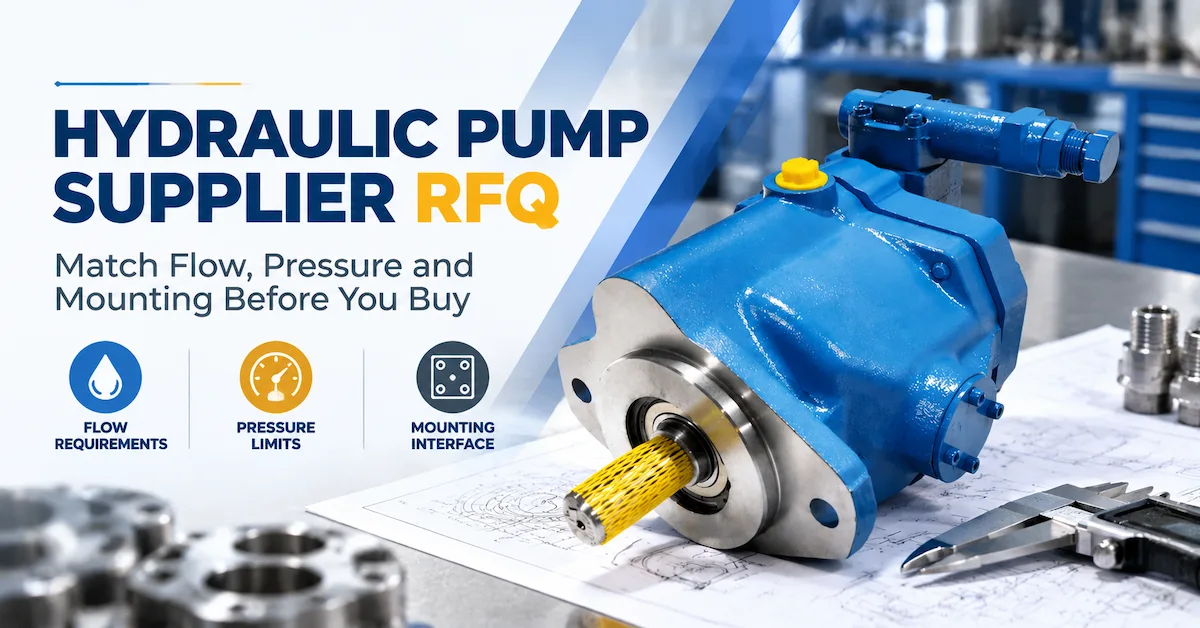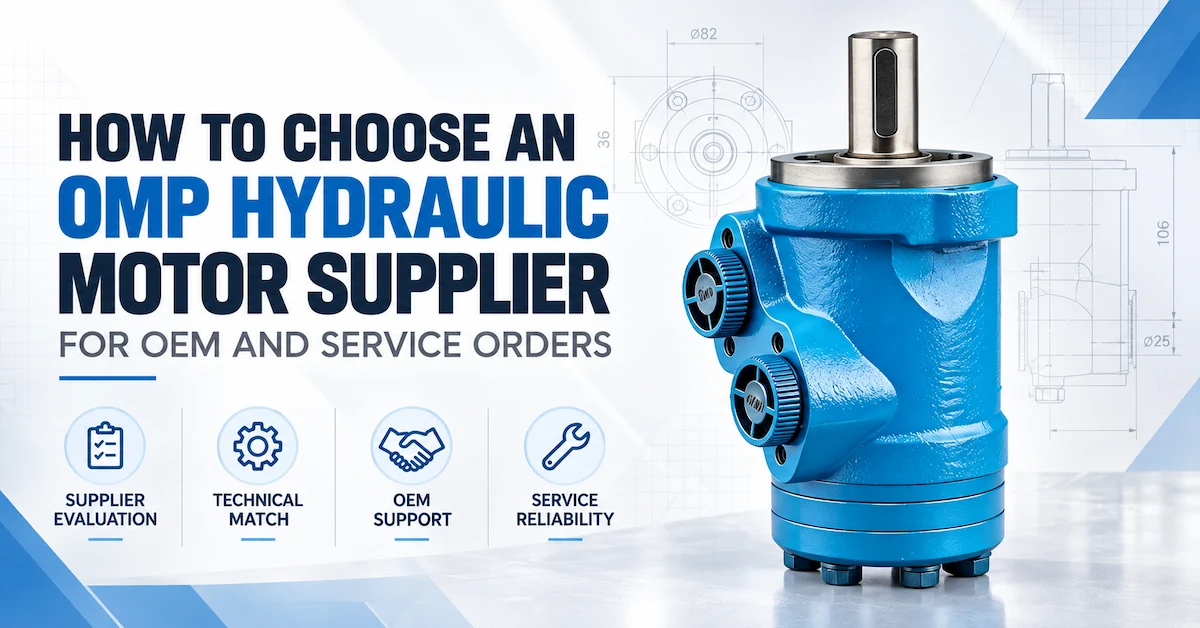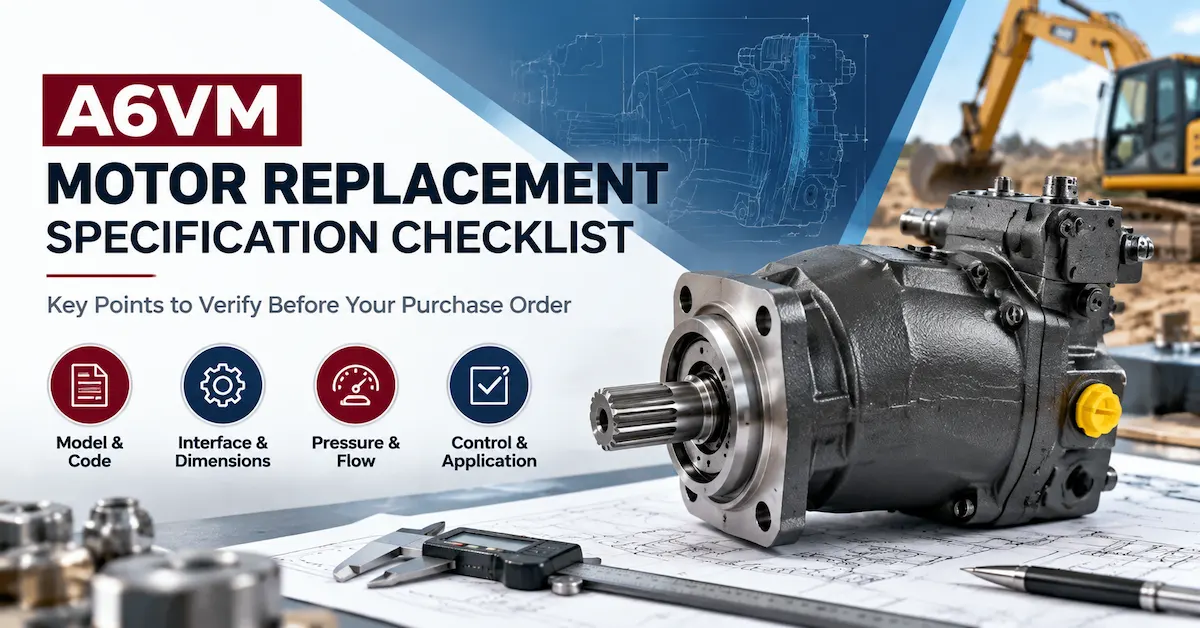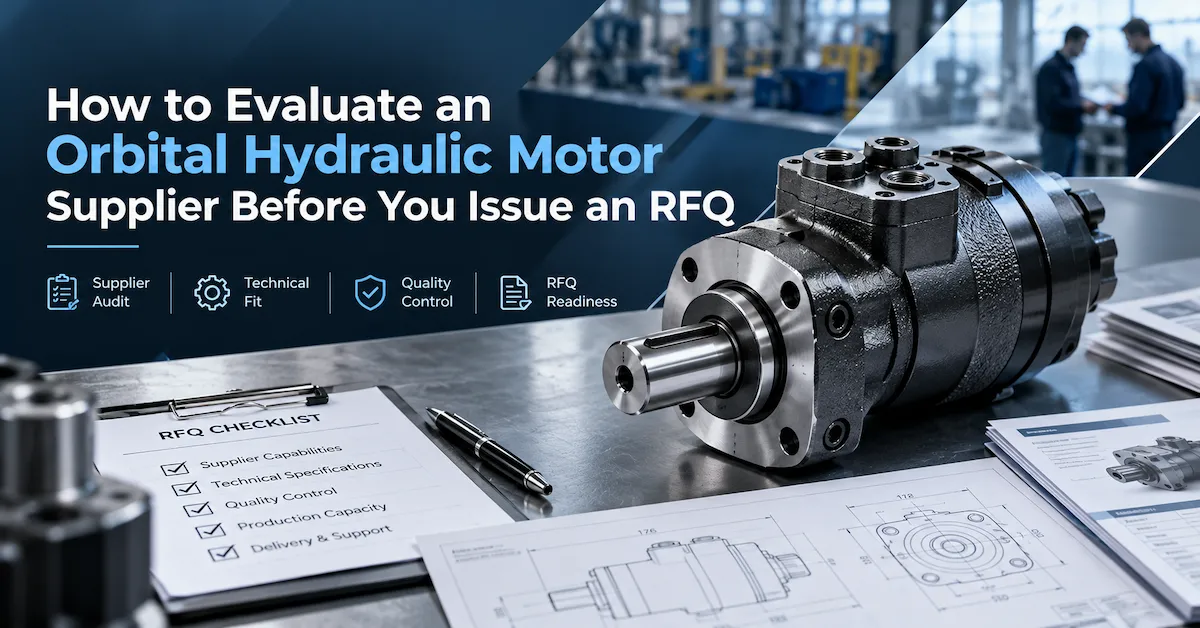

Quick Answer: What Makes a Hydraulic Gear Pump Supplier Suitable for a Standard-Part Order?
A suitable hydraulic gear pump supplier should let you specify a real operating point and a repeatable installation interface, then return an exact model code, controlled drawing and quotation. For mobile equipment OEMs, agricultural machinery manufacturers and standard-part distributors, the minimum RFQ should identify displacement in mL/r, continuous and peak pressure, input speed, rotation direction, shaft form, flange standard, inlet and outlet port position, fluid and duty cycle. A family name alone is not enough. For example, BLINCE publishes CBG2 options from 32 to 110 mL/r and CBHST1 options from 34 to 120 mL/r, but each model has its own length, weight, port size and operating limits.
This article is a transaction-focused selection guide. It is intended to help a buyer reach the correct product page, send a complete RFQ and compare a standard gear pump with fewer iterations. It does not replace the current controlled drawing or written engineering confirmation for a particular configuration.
View the Gear Pump Product Range
How This Article Differs from the Existing Supplier-Consistency Article
BLINCE already has an article titled How a Gear Pump Hydraulic Supplier Ensures Stable Flow and Reliable Industrial Supply. That page discusses material control, machining consistency and long-term supply reliability. Its search intent is supplier capability and stable delivery. The present guide targets a different step in the buying journey: a buyer who is ready to source a standard hydraulic gear pump and needs to choose displacement, rotation, ports and mounting before asking for a quote.
Keeping these intents separate is important. A general supplier-quality article should not be forced to answer every model-selection question, while a selection guide should not spend its main space repeating broad claims about reliability. The new page therefore uses a distinct slug and a distinct primary promise: turn a machine requirement into an orderable gear pump specification.
Who Should Use a Hydraulic Gear Pump Supplier for Standard Components?
The best fit is a buyer who needs a proven fixed-displacement pump format rather than a fully bespoke hydraulic power unit. Three groups commonly fit this intent.
Mobile Equipment OEMs
A mobile equipment OEM may need the same pump interface across a production run, while the engine speed, frame space and auxiliary circuit change between machine variants. A standard gear pump can shorten design time when the supplier can confirm flange, shaft, port orientation and rotation as a complete configuration. The commercial risk is not the basic gear principle; it is receiving a pump that fits mechanically but misses the circuit flow or pressure duty.
Agricultural Machinery Manufacturers
Tractors, harvesters, seeders, sprayers and balers often use an engine-driven pump for lifting, steering or auxiliary functions. Agricultural machines are sensitive to packaging, contamination control and seasonal availability. The RFQ should state whether the pump is expected to run continuously, intermittently or only during a short implement cycle. The same displacement may be acceptable in one machine and unsuitable in another if the speed or pressure duty changes.
Standard-Part Distributors and Repair Buyers
Distributors and repair workshops usually need a repeatable replacement path. They may know the old pump model but not the original drawing revision. A supplier becomes useful when the buyer can send a nameplate photograph, measured shaft and flange details, port thread information and the machine's working pressure. The quotation should then identify any remaining uncertainty instead of silently substituting a visually similar pump.
Start with Displacement and Convert It into Required Flow
Displacement is the first practical filter because it links pump size to flow at a known shaft speed. The basic theoretical relationship is:
Theoretical flow (L/min) = displacement (mL/r) x speed (r/min) / 1000
Actual flow is lower than theoretical flow because of volumetric losses. The product page's volumetric-efficiency figure is therefore useful for screening, but it should not be used as a promise for every oil temperature, pressure or production batch. If a circuit needs 60 L/min at 1,800 r/min, a nominal 32 mL/r pump is not automatically the right answer: the calculated theoretical flow is about 57.6 L/min before losses, leaving little margin. The buyer should either validate a larger displacement or confirm the actual operating point with the supplier.
CBG2 Displacement Options
The BLINCE CBG Series Gear Pump page lists seven CBG2 displacement options. It also lists 800-3000 r/min speed range, 20 MPa rated pressure, 25 MPa maximum pressure and volumetric efficiency of at least 92% for the listed models. The table below reproduces the public model-level values and keeps the model code visible so the family range is not mistaken for one universal rating.
| Public model | Displacement | Rated / max pressure | Speed range | Length L | Weight |
|---|---|---|---|---|---|
| CBG-2032-F* | 32 mL/r | 20 / 25 MPa | 800-3000 r/min | 184.5 mm | 10.5 kg |
| CBG-2040-F* | 40 mL/r | 20 / 25 MPa | 800-3000 r/min | 188.5 mm | 11.5 kg |
| CBG-2050-F* | 50 mL/r | 20 / 25 MPa | 800-3000 r/min | 194.5 mm | 12 kg |
| CBG-2063-F* | 63 mL/r | 20 / 25 MPa | 800-3000 r/min | 202.5 mm | 12.6 kg |
| CBG-2080-F* | 80 mL/r | 20 / 25 MPa | 800-3000 r/min | 212.5 mm | 13.8 kg |
| CBG-2100-F* | 100 mL/r | 20 / 25 MPa | 800-3000 r/min | 224.5 mm | 14.8 kg |
| CBG-2110-F* | 110 mL/r | 20 / 25 MPa | 800-3000 r/min | 230 mm | 16.8 kg |
The asterisk in the public model name indicates that the complete order code still depends on configuration. Confirm the suffix, shaft, flange and port details before issuing a purchase order.
Use Pressure and Duty Cycle to Narrow the Supplier Shortlist
A pump that meets a short pressure peak may still be unsuitable for continuous operation. Ask the hydraulic gear pump supplier to separate at least four values: normal working pressure, continuous pressure, intermittent peak pressure and relief-valve setting. Also state how often the peak occurs and how long it lasts. This prevents a catalogue maximum from being treated as a design rating.
The CBG product page publishes 20 MPa rated pressure and 25 MPa maximum pressure for the listed CBG2 models. The CBHST page publishes 23 MPa rated pressure and 25 MPa maximum pressure, with a 2000 r/min rated speed and 2500 r/min maximum speed. These are useful model-family screening values, not permission to run any configuration at the maximum continuously. The supplier should verify the exact model, oil viscosity, temperature, speed and duty cycle against the current engineering document.
Why Pressure Margin Is a Procurement Issue
When a buyer specifies only “25 MPa gear pump,” different suppliers may interpret that as maximum pressure, short-term peak pressure or a marketing headline. The resulting quotations can look comparable while carrying different continuous-duty assumptions. Put the pressure definition in the RFQ table and ask the supplier to return the same definitions. If the circuit has a high relief setting, include return-line back pressure and any cold-start condition that could increase load.
When a Piston Pump Is a Better Technical Fit
A gear pump is often a sensible standard component for fixed flow, auxiliary circuits and mobile machinery where compactness and straightforward service matter. It is not automatically the right answer for high-pressure variable-flow control. If the machine needs a variable displacement function or a pressure-compensated control strategy, compare the gear-pump shortlist with the PVXS variable displacement axial piston pump or another confirmed piston-pump family. This comparison protects the buyer from forcing a standard gear pump into a duty it was not designed to perform.
Select Rotation Direction Before You Confirm the Shaft
Rotation is a functional parameter, not a cosmetic option. A clockwise pump viewed from the shaft end is not interchangeable with a counterclockwise pump simply because the mounting holes match. The wrong rotation can produce poor suction behavior, incorrect pressure flow direction and rapid damage. Define the viewing reference in the RFQ, for example “clockwise when viewed from the shaft end,” and attach a simple sketch or photograph.
The CBHST1 product information lists clockwise, counterclockwise and bidirectional rotation options, together with H1 and H2 shaft types. The public CBG page lists multiple shaft configurations, including plain key, SAE spline, rectangle spline and involute spline options. The presence of an option on a series page does not mean every displacement is available with every shaft. Ask for the exact combination and the current drawing.
| RFQ field | What to state | Why it matters |
|---|---|---|
| Rotation | CW, CCW or bidirectional, with viewing reference | Determines correct inlet/outlet behavior and compatibility with the drive |
| Shaft | Keyed, SAE spline, rectangle spline, involute spline or exact legacy code | Controls torque transfer, coupling fit and installation length |
| Drive speed | Nominal, minimum and maximum r/min | Links displacement to flow and limits mechanical speed |
Treat Port Size, Port Position and Mounting as One Interface
Many failed replacement orders are caused by an incomplete interface description. “G1 port” does not tell a supplier whether the port is on the rear or side, whether the inlet and outlet use the same size, or whether the hose bend radius fits the machine. Port thread, sealing method, centre distance, flange standard and port orientation should be reviewed together.
The CBHST1 product page is useful because it exposes the port choices in its public table: the 34 and 43 mL/r models show D41 and G3/4 inlet and outlet entries, the 51 and 63 mL/r models show D44 and G1, and the 80, 100 and 120 mL/r models show D55 and G1 1/4. The same page describes ISO and UNI standard assembly dimensions, an ISO four-hole flange and rear or side port designs. These details let a buyer create a more useful comparison than a generic “heavy-duty pump” label.
The CBG2 page describes square-flange mounting and multiple shaft configurations, while its public model table gives L1 and L dimensions that change with displacement. If the pump must fit an existing bracket, send the available envelope, bolt pattern, shaft protrusion and port clearance. A supplier can then confirm whether a standard configuration fits or whether a different series is safer.
Check CBHST Ports and Mounting Options
Compare BLINCE Gear Pump Families Without Mixing Their Ratings
A hydraulic gear pump supplier may show several families under one category page. The correct comparison is not “which family has the highest number?” It is “which family provides the required displacement and interface inside the required pressure and speed duty?” The following matrix is a shortlisting tool based on the public BLINCE product pages.
| Series | Publicly stated selection signal | Best first question | Do not assume |
|---|---|---|---|
| CBG | 32-110 mL/r; 20 MPa rated; 25 MPa maximum; 800-3000 r/min; square flange and shaft options | Which CBG displacement and shaft suffix matches the drive? | That all suffixes share the same length, port or rotation |
| CBHST | 34-120 mL/r; 23 MPa rated; 25 MPa maximum; ISO/UNI dimensions; rear or side ports | Does the ISO four-hole flange and port layout fit the machine? | That a 25 MPa maximum is a continuous operating rating |
| HGP | Aluminum-alloy series page with compact installation and multiple configuration claims | Which current variant and displacement are available for the project? | That the public series-level pressure statement applies to every model |
| AZPW | Aluminum housing, flange installation and application-oriented series description | What is the controlled drawing and exact pressure/displacement combination? | That visual housing details identify the order code |
| SGP | Compact flange-mounted series described for mobile and industrial applications | Which standard configuration matches the oil, speed and mounting space? | That “eco-friendly” is a substitute for an efficiency test value |
The matrix deliberately distinguishes detailed model tables from series-level descriptions. It is appropriate to use the first two rows for an initial numeric shortlist because their public pages expose model data. For HGP, AZPW and SGP, request the current variant data before publishing a technical comparison or committing to an order.
Send a Complete RFQ to the Hydraulic Gear Pump Supplier
A good RFQ is short enough for a sales engineer to read and complete enough for an engineering team to verify. The following fields create a usable baseline for a standard pump quotation.
| RFQ section | Required information | Useful evidence |
|---|---|---|
| Operating point | Flow target, speed range, normal pressure, peak pressure, duty cycle | Circuit diagram, relief setting, measured flow or machine test record |
| Mechanical interface | Flange, bolt pattern, shaft type, shaft length, pilot and envelope | Dimensioned drawing, caliper measurements and nameplate photograph |
| Hydraulic interface | Inlet/outlet thread, port position, hose direction and sealing method | Port sketch, hose photos and existing fitting standard |
| Commercial need | Sample quantity, annual demand, packaging, destination and target timing | Forecast, purchase history and required inspection documents |
For a replacement, add the old pump's full code, manufacturer, direction of rotation, visible port letters, shaft photograph and the reason for replacement. If the old pump failed, describe whether the failure involved contamination, seizure, seal leakage, noise or insufficient flow. A supplier can then separate a true component replacement from a system fault that would damage the new pump.
For an OEM project, add the annual volume and the point at which a sample becomes a production release. Ask whether the quotation is for a standard catalogue configuration or a modified configuration. This distinction affects drawing approval, sample testing and the repeatability of later orders.
Request Specifications and an OEM Quotation
Validate the Sample Before Approving a Repeat Order
A sample approval should confirm more than whether the shaft enters the coupling. Record the pump identity, oil grade, oil temperature, drive speed, inlet condition, pressure points and measured flow. Run the pump through the same operating range that matters to the machine. If the application has a short peak, document the duration and the recovery behavior rather than treating a single pressure reading as proof of suitability.
Mechanical Checks
Check pilot diameter, bolt-hole spacing, flange seating, shaft engagement, key or spline fit, shaft end play and available hose clearance. Confirm that the inlet hose does not impose a side load on the port. Measure the pump envelope against the production bracket, not only the prototype bracket.
Hydraulic Checks
Measure flow at a defined speed and low pressure, then repeat at the normal working pressure. Monitor oil temperature and noise. A flow result without a pressure and temperature context is difficult to compare between suppliers. Record the relief-valve setting separately from the pump's rated or maximum pressure.
Documentation Checks
Keep the quotation, drawing revision, inspection record, label photograph and approved sample together. When a distributor later orders the same standard part, the record prevents a visually similar but mechanically different pump from entering the stock location. Ask the supplier to identify the exact suffix on the invoice and packing label.
Common Purchasing Mistakes That Create Expensive Rework
Choosing Only by Displacement
Two pumps with the same mL/r can have different shafts, ports, flange standards, length and pressure limits. Displacement is a starting filter, not a complete order code.
Copying a Maximum Pressure from a Family Page
A maximum value may describe an intermittent condition or a particular model. It should never replace the continuous-pressure definition in the quotation and drawing.
Ignoring Rotation Reference
“Clockwise” is ambiguous if the viewing position is not stated. Use a shaft-end reference and attach a sketch.
Treating a Public Page as a Live Stock Promise
Product pages establish technical scope; they do not confirm current inventory, MOQ, lead time, packaging or project-specific compatibility. Those commercial fields belong in the quotation response.
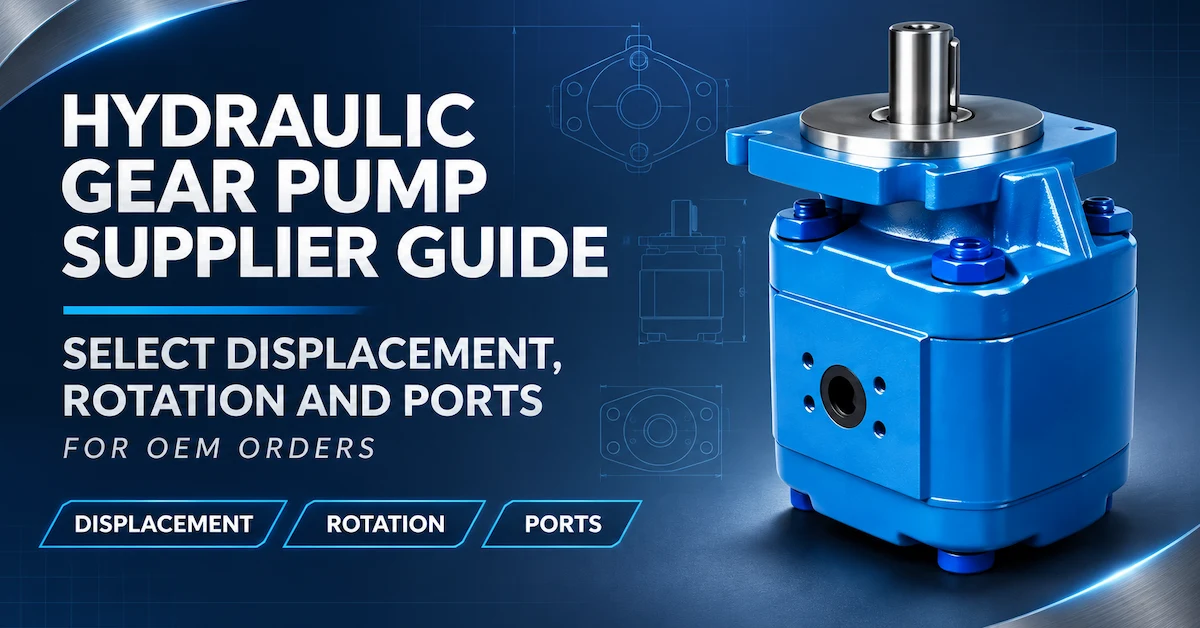
Using a Blog Cover as Product Evidence
A blog cover can illustrate a topic but cannot prove a model. This guide uses images tied to the CBG and CBHST product detail pages so the visual evidence has a traceable product context.
What to Confirm with BLINCE Before the Purchase Order
BLINCE Hydraulic is Dongguan Blince Machinery & Electronics Co., Ltd., established in 2004 in Dongguan, Guangdong, near the Shenzhen and Guangzhou ports. The public About BLINCE page describes hydraulic design, manufacturing, R&D and testing capabilities, together with ISO 9001 and CE compliance statements. These facts identify the manufacturer and its scope; they do not remove the need to verify the specific pump configuration.
Before approval, ask the BLINCE sales and engineering teams to confirm the exact series, model and suffix; displacement; continuous and peak pressure; rated speed; rotation; shaft; flange; inlet/outlet port; fluid and temperature assumptions; sample test plan; packaging; MOQ; lead time; and any compatibility decision. If a field is not public, the correct answer is a written confirmation or a marked “to be quoted,” not an invented number.
For a first quotation, send your operating point and interface drawings through the gear pump product category. If your requirement is already close to a CBG or CBHST model, link the product page in your RFQ and identify the remaining unknowns. This gives the supplier a clear route from catalogue screening to an engineering-approved order code.
FAQ for Hydraulic Gear Pump Supplier Buyers
What information should I send first to a hydraulic gear pump supplier?
Send flow target, speed, normal and peak pressure, rotation, shaft, flange, inlet and outlet ports, fluid, duty cycle and installation envelope. Add the old pump code or a dimensioned drawing when the request is a replacement.
Which BLINCE gear pump series covers 32 to 110 mL/r?
The public CBG2 table lists 32, 40, 50, 63, 80, 100 and 110 mL/r options. The exact model suffix, shaft, flange, rotation and port details still need confirmation.
Which series publishes ISO and UNI mounting information?
The CBHST1 product page describes ISO and UNI standard assembly dimensions and an ISO four-hole flange, together with rear and side port choices. Confirm the drawing for the selected displacement before ordering.
Can I select a pump only from a product photograph?
No. A photograph can help identify a series, but it cannot confirm displacement, rotation, shaft, port thread or pressure duty. Use the photograph together with the product page, nameplate and measurements.
Does the public maximum-pressure value equal continuous pressure?
No. Rated, continuous, intermittent and maximum pressure can have different meanings. Ask the supplier to define each value for the exact model and operating conditions.
Can BLINCE confirm MOQ and lead time from the product page?
The public product pages do not establish a universal MOQ, live stock position or project lead time. Include quantity, destination and required timing in the RFQ so the commercial team can quote the current condition.
Conclusion
The right hydraulic gear pump supplier is the one that turns your machine data into a traceable, orderable configuration. Start with displacement and flow, then verify pressure duty, rotation, shaft, mounting and ports as one interface. Use the public CBG and CBHST tables for an evidence-based shortlist, treat HGP, AZPW and SGP as series-level screening options until the exact variant is confirmed, and validate the sample under the real speed, pressure and temperature conditions. For a standard-part purchase, send the complete operating point and drawing set to BLINCE and request specifications and an OEM quotation before releasing the order.