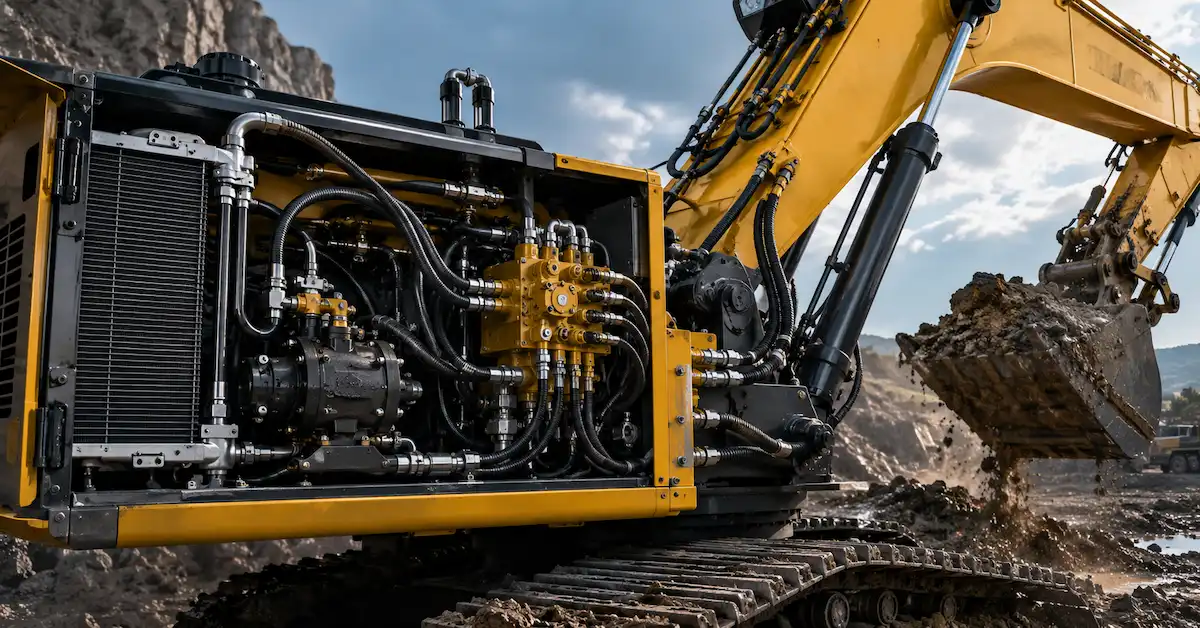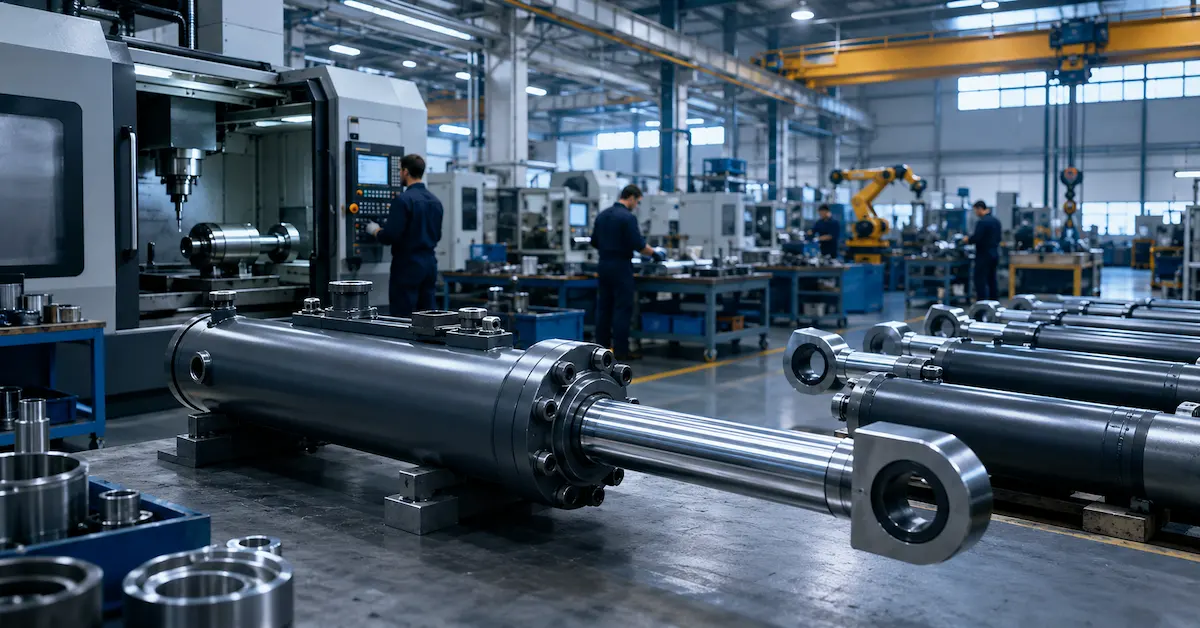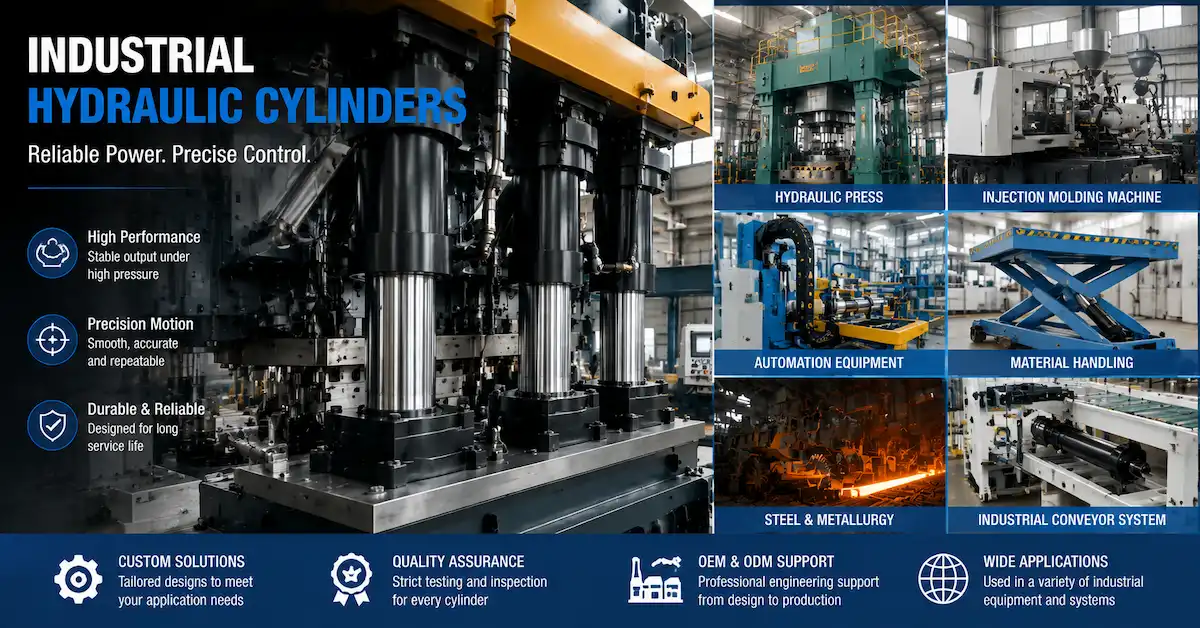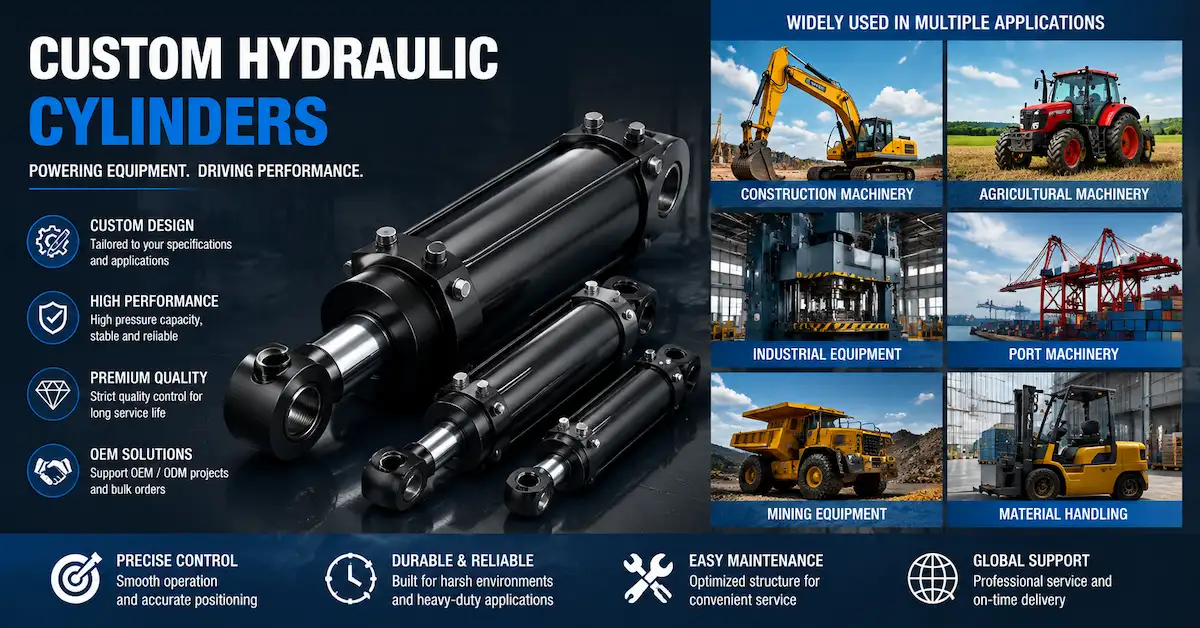



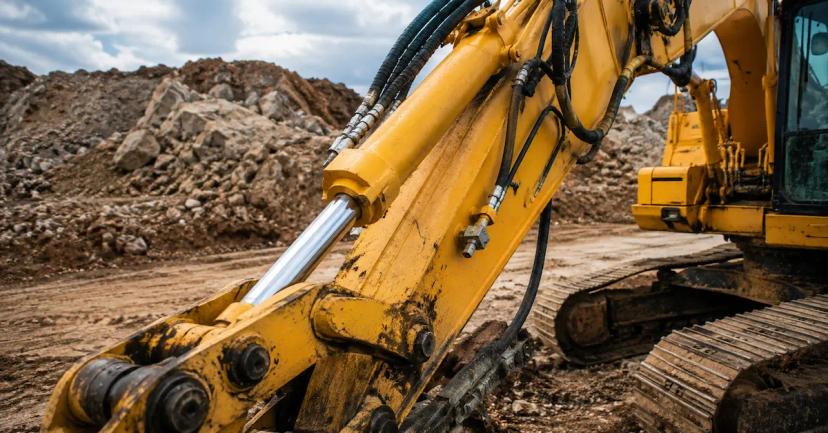
Choosing a reliable hydraulic cylinder supplier is important for machinery OEMs, hydraulic distributors, repair companies, equipment owners, and project buyers. A hydraulic cylinder is not just a metal tube with a piston rod. It converts hydraulic pressure into strong linear movement for lifting, pushing, pulling, pressing, clamping, tilting, and positioning.
In heavy-duty machinery, one unsuitable cylinder can cause leakage, weak lifting force, unstable motion, seal failure, rod wear, or machine downtime. For B2B buyers, the real value of a supplier is not only the product price. A good supplier should help match the right cylinder, confirm technical details, support replacement projects, control delivery risk, and provide useful communication before and after shipment.
This guide explains how to choose a hydraulic cylinder supplier from a practical sourcing perspective and how BLINCE supports buyers with hydraulic cylinders and related hydraulic components for machinery applications.
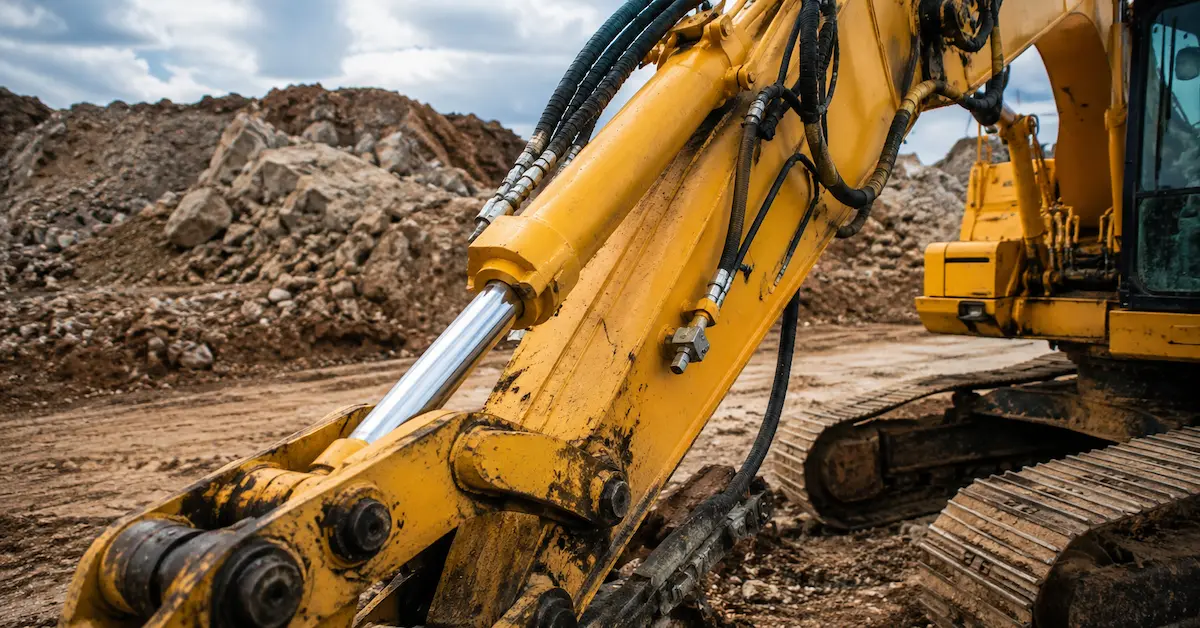
Quick Answer: What Should You Look for in a Hydraulic Cylinder Supplier?
A reliable hydraulic cylinder supplier should provide suitable product options, fast technical communication, clear parameter confirmation, stable quality, replacement matching, OEM support, and application-based sourcing advice.
Before placing an order, buyers should check:
- Cylinder type and application fit
- Bore diameter, rod diameter, and stroke
- Working pressure and peak pressure
- Mounting type and installation dimensions
- Port thread and hose connection
- Seal structure and leakage control
- Rod surface treatment
- Replacement matching support
- Sample and batch order capability
- Technical support and quotation response
The best supplier is not always the lowest-priced one. It is the supplier that helps buyers avoid wrong dimensions, leakage problems, delivery delays, and repeated replacement cost.
Why Supplier Selection Matters for Hydraulic Cylinders
Hydraulic cylinders often work in high-pressure and high-load systems. They may be exposed to dust, mud, vibration, outdoor weather, high temperature, humidity, or continuous operation. If the cylinder is not properly selected, the problem may not appear immediately during installation. It may appear after the machine begins working under real load.
Common failure results include:
- External oil leakage
- Internal leakage and load drift
- Weak lifting force
- Rod bending
- Rod surface scratches
- Seal damage
- Slow or unstable movement
- Poor mounting fit
- Hose connection problems
- Short service life
For machinery buyers, the cost of a wrong hydraulic cylinder is not only the cylinder price. It may include downtime, labor cost, project delay, urgent shipping, and customer complaints.
BLINCE supplies hydraulic cylinders as part of its broader hydraulic product range, supporting customers who also need hydraulic motors, pumps, valves, coolers, hoses, fittings, steering control units, accessories, and complete hydraulic system matching.
Hydraulic Cylinder Supplier vs Hydraulic Cylinder Manufacturer
Many buyers use the words “supplier” and “manufacturer” together, but the sourcing focus is slightly different.
| Item | Hydraulic Cylinder Supplier | Hydraulic Cylinder Manufacturer |
|---|---|---|
| Main Focus | Product supply, matching, delivery, communication | Production, machining, design, factory process |
| Buyer Concern | Can this supplier provide the right cylinder quickly and reliably? | Can this factory manufacture the cylinder correctly? |
| Common Need | Replacement, stock, OEM support, model matching | Custom design, machining, welding, testing |
| Best For | Distributors, repair companies, project buyers, OEM buyers | OEM development and production-focused buyers |
| Key Value | Fast matching, supply stability, technical support | Manufacturing control and customization |
For many B2B buyers, the ideal partner should have both supplier capability and manufacturing knowledge. This means the supplier can communicate like a sourcing partner and understand the technical details behind the cylinder.
Common Buyer Pain Points When Sourcing Hydraulic Cylinders
Many customers search for a hydraulic cylinder supplier because they already have a sourcing or equipment problem.
1. The old cylinder is damaged but the model is unclear
Repair companies and equipment owners often have only photos, old dimensions, or machine information. A supplier should help review bore size, rod diameter, stroke, mounting type, port thread, and installation space.
2. The replacement cylinder does not fit
Even small differences in pin hole size, retracted length, port position, or mounting style can stop installation. This is why drawings and measurements are important.
3. The cylinder leaks after short use
Leakage may come from wrong seal selection, poor rod surface, excessive pressure, contamination, side load, or unsuitable working temperature.
4. The supplier cannot support small batch or urgent orders
Distributors and repair companies often need flexible order support. OEM buyers may need samples before batch production.
5. The cylinder cannot handle real working conditions
A cylinder used in construction machinery is different from one used in a clean industrial system. Outdoor dust, vibration, shock load, and side load must be considered.
6. Communication is too general
A professional supplier should not only ask for quantity. The supplier should ask for pressure, stroke, bore, rod, mounting, port, machine type, working environment, and old cylinder information.
Main Hydraulic Cylinder Types Buyers May Need
A good hydraulic cylinder supplier should help buyers select the right structure for the application.
| Cylinder Type | Main Feature | Common Use |
| Single-Acting Hydraulic Cylinder | Hydraulic force works in one direction | Lifting, pressing, simple machinery |
| Double-Acting Hydraulic Cylinder | Hydraulic force works in both directions | Construction machinery and industrial equipment |
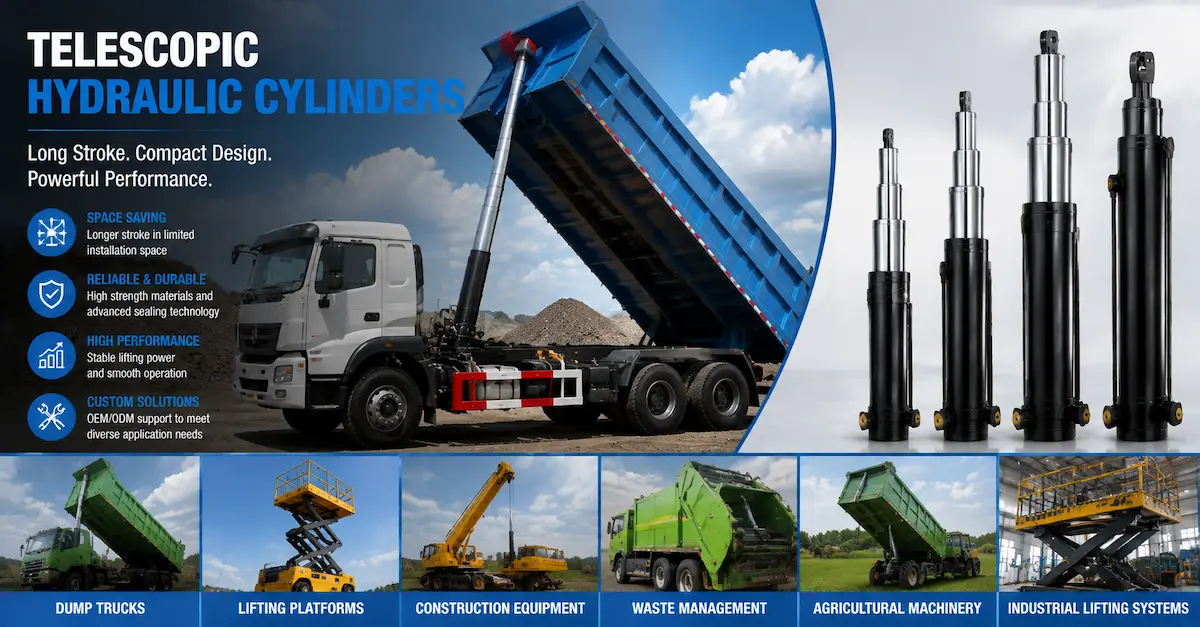
| Telescopic Hydraulic Cylinder | Long stroke in compact space | Dump trucks, lifting platforms |
| Welded Hydraulic Cylinder | Compact and strong structure | Mobile machinery and heavy-duty equipment |
| Tie-Rod Hydraulic Cylinder | Easy maintenance and modular design | Factory equipment and industrial machines |
| Custom Hydraulic Cylinder | Designed for specific requirements | OEM machinery and special projects |
For machinery applications, welded and custom hydraulic cylinders are often preferred when strength, compact size, and installation flexibility are important.
Key Parameters to Confirm Before Requesting a Quote
To get an accurate quotation from a hydraulic cylinder supplier, buyers should prepare clear information.
| Parameter | Why It Matters |
| Bore Diameter | Determines output force |
| Rod Diameter | Affects strength and bending resistance |
| Stroke Length | Defines movement distance |
| Working Pressure | Confirms load capability |
| Peak Pressure | Important for shock-load conditions |
| Mounting Type | Ensures installation compatibility |
| Pin Hole Size | Critical for replacement fitting |
| Port Thread | Prevents hose connection mismatch |
| Retracted Length | Ensures the cylinder fits the machine |
| Extended Length | Confirms full movement range |
| Seal Requirement | Affects leakage control and service life |
| Working Environment | Dust, mud, heat, humidity, vibration, salt spray |
| Quantity | Sample, batch order, or annual demand |
BLINCE provides technical support for hydraulic product selection, installation guidance, troubleshooting, and component matching.
How to Choose a Reliable Hydraulic Cylinder Supplier
1. Check whether the supplier asks technical questions
A reliable supplier should not quote only by product name. For hydraulic cylinders, technical confirmation is essential. If a supplier recommends a cylinder without asking about bore, rod, stroke, pressure, mounting, and application, the risk of mismatch is high.
2. Confirm replacement matching ability
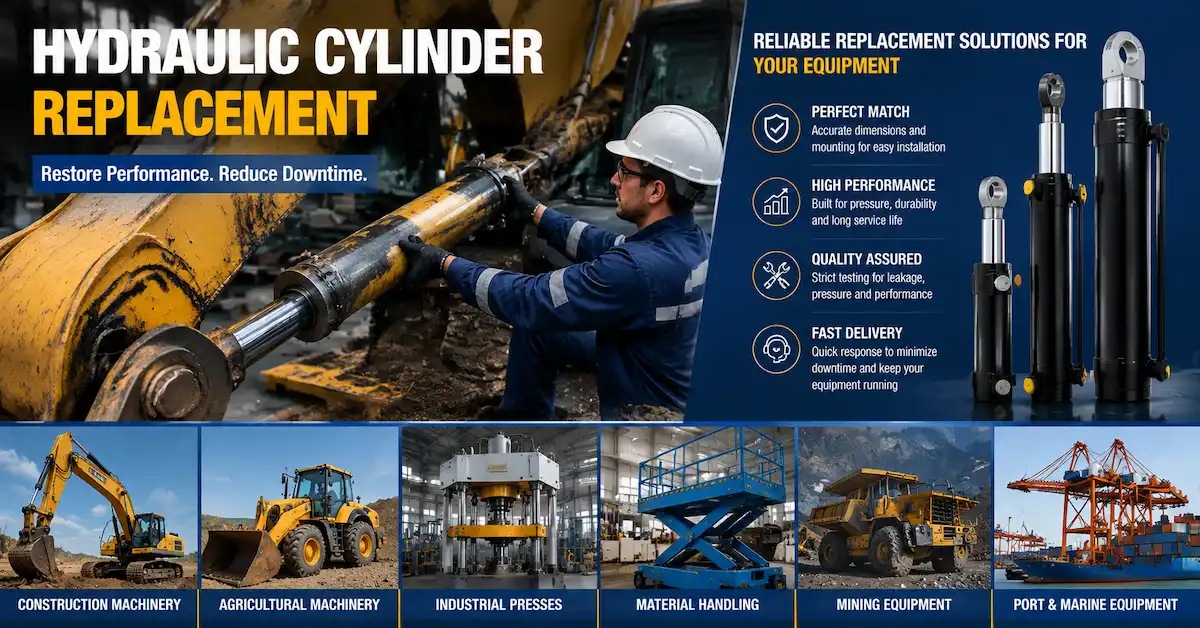
For replacement projects, buyers should prepare old cylinder photos, machine model, pin size, port thread, retracted length, extended length, and failure symptoms. A supplier with replacement experience can help reduce installation risk.
3. Review product and system coverage
A hydraulic cylinder works together with pumps, valves, hoses, fittings, and hydraulic oil. If a system has slow movement or weak force, the problem may not always be the cylinder itself. A supplier with broader hydraulic product knowledge can help buyers review the system more effectively.
BLINCE supports hydraulic cylinders together with pumps, valves, hoses, fittings, motors, coolers, and steering control units through its hydraulic products page.
4. Evaluate quality control
A hydraulic cylinder supplier should have clear quality requirements for dimensions, pressure, leakage, rod surface, seals, welding, and packaging.
Important QC points include:
- Bore and rod dimension inspection
- Stroke confirmation
- Port thread inspection
- Seal assembly check
- Pressure test
- Leakage test
- Rod surface inspection
- Mounting size inspection
- Packaging protection
Buyers who need supplier credibility for long-term cooperation can review BLINCE’s certificates.
5. Check OEM and custom support
OEM buyers may need custom bore, rod, stroke, mounting, port position, surface treatment, seal type, product marking, or packaging. A qualified supplier should be able to discuss these requirements before production.
6. Consider delivery and communication
For distributors and repair companies, delivery speed matters. For OEM buyers, stable batch supply matters. A good supplier should provide realistic lead time, clear quotation details, and fast communication when questions appear.
Common Applications of Hydraulic Cylinders
Hydraulic cylinders are widely used wherever strong linear motion is needed.
Construction Machinery
Excavators, loaders, bulldozers, cranes, pavers, compactors, and drilling machines use hydraulic cylinders for boom lifting, bucket movement, blade adjustment, steering, and auxiliary actions.
Agricultural Machinery
Harvesters, tractors, and agricultural attachments use cylinders for lifting, steering, header adjustment, folding, and positioning.
Industrial Equipment
Press machines, shearing machines, forming equipment, production lines, rubber and plastic processing equipment, and metalworking machinery use cylinders for pressing, clamping, feeding, and cutting.
Port and Offshore Machinery
Port cranes, deck machinery, lifting systems, offshore platforms, and winches require cylinders that can handle heavy load, humidity, vibration, and outdoor operation.
Cement and Solid Waste Crushing
Dust, impact load, vibration, and continuous operation make strong cylinder structure and sealing performance very important.
Tunnel Reinforcement and Material Handling
Tunneling systems, lifting platforms, forklifts, conveyors, and handling equipment use cylinders for pushing, lifting, clamping, tilting, and positioning.
Buyers can explore more application fields through the BLINCE applications page.
Supplier Checklist for B2B Buyers
| Evaluation Point | Reliable Supplier | High-Risk Supplier |
| Technical Confirmation | Asks bore, rod, stroke, pressure, mounting, and application | Only asks quantity |
| Replacement Support | Reviews photos, drawings, and old dimensions | Recommends by rough similarity |
| OEM Support | Can discuss custom size, mounting, port, seal, and packaging | Only standard products |
| Quality Control | Pressure and leakage testing available | No clear inspection process |
| Product Range | Supports cylinders and related hydraulic parts | Limited product knowledge |
| Application Knowledge | Understands machinery environments | Only sells by model name |
| Communication | Fast and technical | Slow or unclear |
| Delivery Support | Supports sample and batch needs | Unstable lead time |
For B2B buyers, a low-risk supplier can reduce hidden costs and improve long-term supply confidence.
What Information Should You Send for a Fast Quotation?
To receive a faster and more accurate quotation from a hydraulic cylinder supplier, send the following details:
| Required Information | Example |
| Equipment Type | Excavator, loader, harvester, press machine, forklift |
| Cylinder Type | Single-acting, double-acting, telescopic, welded, custom |
| Bore Diameter | mm or inch |
| Rod Diameter | mm or inch |
| Stroke Length | mm or inch |
| Working Pressure | Rated and peak pressure |
| Mounting Type | Pin, flange, clevis, trunnion, custom |
| Pin Hole Size | Diameter and width |
| Port Thread | BSP, NPT, Metric, SAE |
| Retracted Length | Overall closed length |
| Extended Length | Overall open length |
| Working Environment | Dust, mud, vibration, humidity, heat, salt spray |
| Existing Cylinder Info | Photos, drawings, nameplate, old model |
| Quantity | Sample order, batch order, annual demand |
Customers can send drawings, photos, measurements, machine model, pressure, stroke, mounting details, and quantity through the BLINCE contact page.
Why Choose BLINCE as Your Hydraulic Cylinder Supplier?
BLINCE is a China hydraulic product supplier with experience in hydraulic cylinders, motors, pumps, valves, coolers, steering control units, hoses, fittings, accessories, and hydraulic systems.
For buyers looking for a hydraulic cylinder supplier, BLINCE offers:
- Hydraulic cylinder support for machinery applications
- OEM and replacement matching
- Technical communication before ordering
- Hydraulic component matching support
- Manufacturing and quality control capability
- Support for pumps, valves, hoses, fittings, coolers, motors, and systems
- Suitable solutions for construction, agriculture, industrial equipment, port machinery, offshore equipment, tunneling, and material handling
Instead of treating the cylinder as an isolated part, BLINCE helps buyers consider the full hydraulic system, including pump pressure, valve control, hose connection, mounting layout, oil temperature, and working environment.
Buyers can also review BLINCE’s manufacturing capabilities before starting long-term cooperation.
FAQ
1. What does a hydraulic cylinder supplier provide?
A hydraulic cylinder supplier provides standard, replacement, or custom hydraulic cylinders used for lifting, pushing, pulling, pressing, clamping, tilting, and positioning.
2. How do I choose the right hydraulic cylinder supplier?
Check whether the supplier can support technical confirmation, replacement matching, OEM requirements, quality control, pressure testing, application experience, and fast communication.
3. Can BLINCE provide replacement hydraulic cylinders?
Yes. Buyers can send old cylinder photos, dimensions, machine model, stroke, port thread, mounting size, and working pressure for replacement matching.
4. What information should I send for a quotation?
Send cylinder type, bore diameter, rod diameter, stroke, pressure, mounting type, pin size, port thread, retracted length, extended length, application, and quantity.
5. What causes hydraulic cylinder leakage?
Common causes include seal wear, poor rod surface, contamination, excessive pressure, wrong seal material, side load, or poor machining accuracy.
6. Can BLINCE support OEM hydraulic cylinders?
Yes. BLINCE supports OEM hydraulic cylinder supply, custom requirements, technical selection, and hydraulic component matching based on drawings and application details.
7. Which machinery uses hydraulic cylinders?
Hydraulic cylinders are used in construction machinery, agricultural machinery, industrial equipment, port machinery, offshore equipment, tunneling systems, material handling, and heavy-duty hydraulic systems.
8. How do I avoid ordering the wrong replacement cylinder?
Send old cylinder photos, machine model, bore, rod, stroke, mounting dimensions, pin hole size, port thread, and working pressure before ordering.
Conclusion
Choosing a reliable hydraulic cylinder supplier helps buyers reduce downtime, avoid wrong replacement parts, improve machinery performance, and build stable long-term sourcing channels. For heavy-duty applications, buyers should not select cylinders only by price. The right supplier should help confirm dimensions, pressure, stroke, mounting, sealing, working environment, and application requirements.
For OEM buyers, distributors, repair companies, system integrators, and project teams, BLINCE can support hydraulic cylinder supply with technical selection, replacement matching, OEM communication, quality control, and full hydraulic component support.
To get a faster quotation, send your cylinder photos, machine model, bore, rod diameter, stroke, pressure, mounting size, port thread, working environment, and quantity to BLINCE. A properly selected hydraulic cylinder can improve lifting performance, reduce leakage risk, and support long-term machinery reliability.