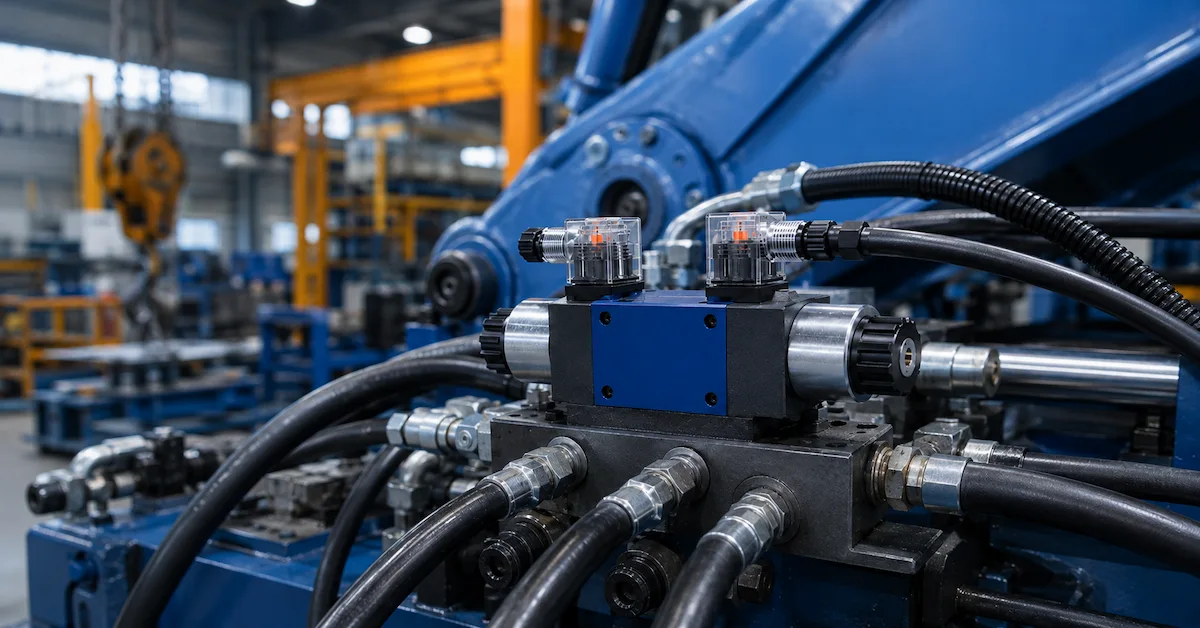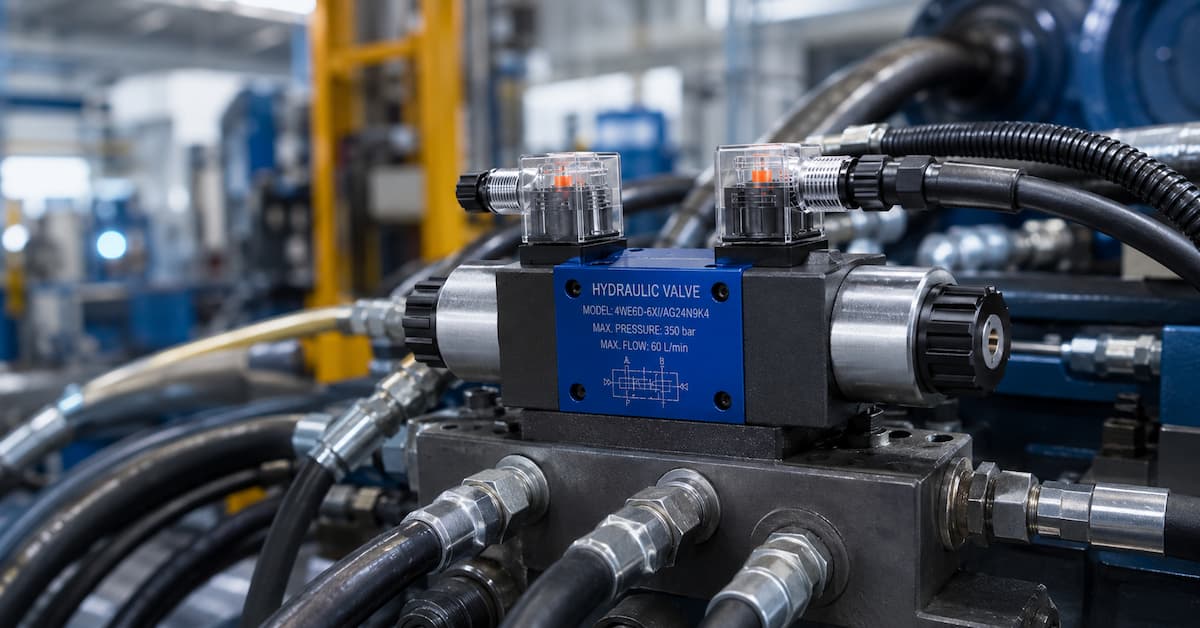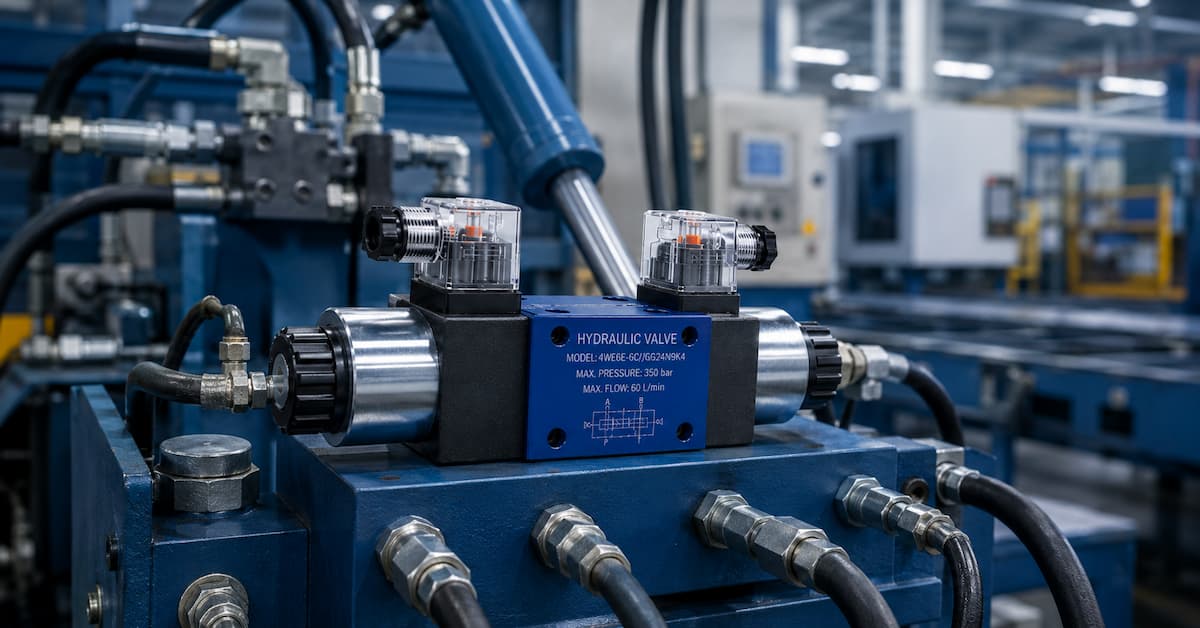



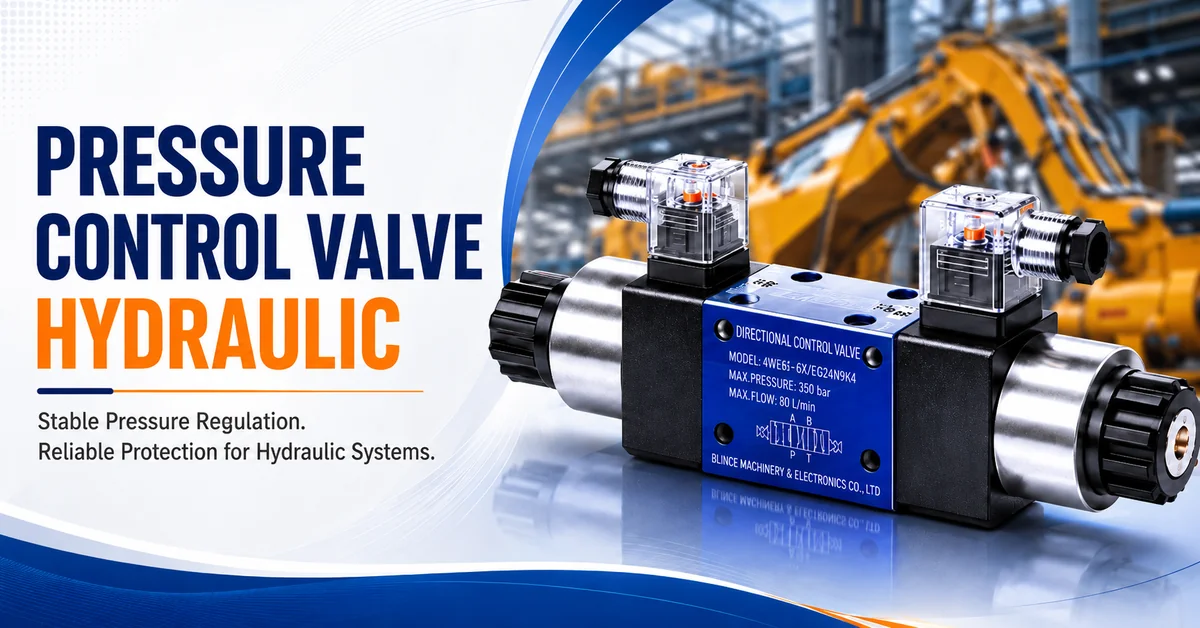
A pressure control valve hydraulic system is essential for protecting hydraulic pumps, motors, cylinders, hoses, fittings, and actuators from excessive pressure. In heavy machinery, industrial equipment, agricultural machines, port equipment, and tunneling systems, pressure is not always stable. It changes with load, speed, oil temperature, actuator movement, and operating conditions.
If pressure is not controlled correctly, the result can be serious: hose bursting, pump damage, seal failure, actuator shock, overheating, unstable movement, and unexpected downtime. For OEM manufacturers, hydraulic distributors, maintenance teams, and project buyers, choosing the right hydraulic pressure control valve is not only a product decision. It is a system safety decision.
This guide explains how to choose a pressure control valve hydraulic solution from a practical B2B purchasing perspective. It covers valve functions, common types, technical specifications, application scenarios, quality risks, and how BLINCE supports buyers with hydraulic valve solutions for demanding machinery applications.
Quick Answer: What Is a Pressure Control Valve in a Hydraulic System?
A hydraulic pressure control valve regulates, limits, or maintains pressure in a hydraulic circuit. It helps protect the system from overload and keeps hydraulic components working within a safe pressure range.
In simple terms, a pressure control valve can help:
- Limit maximum system pressure
- Protect pumps and actuators
- Prevent hose or seal failure
- Maintain stable operating pressure
- Reduce pressure shock
- Improve equipment safety
- Support controlled unloading or sequencing
For buyers looking for a pressure control valve hydraulic solution, the key selection factors include pressure range, flow rate, valve type, adjustment method, response speed, leakage control, port size, mounting style, and working environment.
Why Pressure Control Valves Matter in Hydraulic Equipment
Hydraulic systems generate force through pressurized oil. The higher the pressure, the greater the force available to move cylinders, rotate hydraulic motors, or drive heavy machinery functions. However, excessive pressure can quickly damage the system.
For example:
- In construction machinery, sudden load changes may create pressure spikes.
- In harvesting machinery, continuous seasonal operation can increase oil temperature and pressure fluctuation.
- In sheet metal equipment, pressing and bending actions require stable and repeatable pressure.
- In solid waste crushing, shock load may cause sudden pressure rise.
- In tunnel reinforcement equipment, long working cycles require reliable pressure protection.
A properly selected hydraulic pressure control valve helps the system respond safely to these changes.
BLINCE supplies hydraulic valves as part of its wider hydraulic product range, supporting customers who need hydraulic motors, pumps, valves, cylinders, coolers, hoses, fittings, steering control units, and complete hydraulic system support.
Common Buyer Pain Points When Choosing Hydraulic Pressure Control Valves
Many customers search for a pressure control valve hydraulic product because they are facing system instability or replacement problems. Common pain points include:
- System pressure is too high
Excessive pressure causes seal damage, pump overload, hose failure, or unsafe operation. - Pressure is unstable
The machine vibrates, moves unevenly, or produces pressure shock during operation. - Wrong pressure setting range
The selected valve cannot be adjusted to the required working pressure. - Insufficient flow capacity
The valve creates pressure loss or cannot handle the system’s required flow rate. - Slow response under load change
The valve reacts too slowly when pressure rises suddenly. - Internal leakage
Poor sealing or poor machining causes pressure loss and reduced system efficiency. - Port and thread mismatch
The valve cannot connect correctly with existing hoses, fittings, or manifolds. - No technical support from supplier
Buyers receive a product but do not get help with model matching, installation, or troubleshooting.
To avoid these problems, buyers should confirm system pressure, flow rate, valve function, adjustment range, mounting type, port thread, oil condition, and application environment before ordering.
Main Types of Hydraulic Pressure Control Valves
Different pressure control valves are used for different hydraulic circuit functions.
| Valve Type | Main Function | Best For | Buyer Notes |
|---|---|---|---|
| Relief Valve | Limits maximum pressure by releasing excess oil | System protection, pump safety | Most common pressure protection valve |
| Reducing Valve | Reduces pressure in a branch circuit | Multi-pressure systems | Useful when one actuator needs lower pressure |
| Sequence Valve | Opens after pressure reaches a set value | Ordered actuator movement | Common in multi-step hydraulic actions |
| Counterbalance Valve | Controls load holding and prevents runaway movement | Lifting systems, cylinders, cranes | Important for safety under gravity load |
| Unloading Valve | Diverts pump flow when pressure reaches a set level | Energy-saving circuits | Helps reduce heat and pump load |
| Proportional Pressure Valve | Adjusts pressure through electrical signal | Precise control systems | Suitable for advanced OEM equipment |
For many heavy-duty systems, a relief valve is the first pressure protection component. However, in more complex equipment, reducing valves, sequence valves, counterbalance valves, and proportional pressure valves may also be required.
Key Technical Specifications Buyers Should Confirm
Before ordering a pressure control valve hydraulic product, buyers should prepare a technical checklist. This helps prevent model mismatch and reduces communication time.
| Parameter | Why It Matters | What Buyers Should Confirm |
| Pressure Range | Determines adjustment capability | Minimum, maximum, and working pressure |
| Rated Flow | Affects system response and pressure loss | Required L/min or GPM |
| Valve Type | Defines circuit function | Relief, reducing, sequence, counterbalance, unloading |
| Adjustment Method | Affects operation and maintenance | Knob, screw, locknut, pilot control, electric control |
| Response Stability | Controls pressure shock | Required response speed and stability |
| Port Size | Ensures connection compatibility | BSP, NPT, Metric, SAE or custom thread |
| Mounting Type | Affects installation | Inline, subplate, cartridge, modular, manifold |
| Leakage Control | Affects efficiency and pressure holding | Internal leakage tolerance |
| Oil Cleanliness | Influences valve life | Filtration level and contamination control |
| Working Temperature | Affects seals and response | Ambient and oil temperature range |
| Application Load | Determines safety margin | Static load, shock load, continuous load |
| Environment | Affects durability | Dust, vibration, humidity, salt spray, heat |
A reliable supplier should not recommend a hydraulic pressure control valve only by appearance. The valve should be matched according to the hydraulic circuit and real working conditions. BLINCE provides technical support for product selection, installation guidance, maintenance advice, and troubleshooting.
How to Choose the Right Pressure Control Valve Hydraulic Solution
1. Identify the purpose of pressure control
The first question is not “Which model is cheapest?” but “What pressure problem does this valve need to solve?”
A buyer may need to:
- Protect the pump from overload
- Limit maximum system pressure
- Reduce pressure for one branch circuit
- Hold a lifting load safely
- Control actuator sequence
- Unload pump flow
- Improve pressure stability in an OEM system
Different purposes require different valve types. A relief valve and a reducing valve are not interchangeable. A counterbalance valve and a sequence valve also serve different safety and control functions.
2. Confirm working pressure and peak pressure
Hydraulic systems do not always work at one fixed pressure. A machine may have normal working pressure and short-term peak pressure during impact, lifting, cutting, crushing, or sudden load changes.
Buyers should confirm:
- Normal working pressure
- Maximum system pressure
- Peak pressure during shock load
- Required adjustment range
- Safety margin
For construction machinery, solid waste crushing, port machinery, shield tunneling, and heavy lifting systems, pressure margin is especially important.
3. Match valve flow capacity with system flow
Flow rate affects pressure loss and response. If a pressure control valve is too small, it may restrict oil flow, increase heat, or create unstable pressure. If it is too large, adjustment accuracy may be reduced and cost may increase.
A suitable valve should match pump output, actuator demand, and circuit design.
4. Choose the correct adjustment method
Simple pressure valves may use manual screw adjustment. Some systems require locknut adjustment to prevent setting changes during vibration. Advanced OEM systems may need pilot-operated or proportional pressure control.
For mobile machinery and heavy-duty environments, adjustment stability is very important. A pressure setting that shifts during operation can create safety risks.
5. Check installation and port compatibility
The valve must fit the machine physically and hydraulically. Buyers should confirm mounting style, thread standard, port direction, installation space, and manifold compatibility.
Common port standards include BSP, NPT, Metric, and SAE. If the valve is used as a replacement part, old valve photos, nameplate, port measurements, and installation drawings are very helpful.
6. Consider oil temperature and contamination
Pressure control valves are sensitive to oil cleanliness. Contaminated oil may cause spool sticking, poor sealing, pressure drift, or slow response. High oil temperature may reduce seal life and increase leakage.
For dusty or continuous-operation environments, buyers should also consider filtration, hydraulic cooler performance, and regular oil maintenance.
7. Evaluate supplier quality and technical support
A pressure control valve protects the whole hydraulic system. Buyers should evaluate not only product price, but also supplier capability, testing process, production consistency, technical response, and after-sales support.
BLINCE supports hydraulic valve selection as part of complete hydraulic component matching, helping customers consider pumps, motors, cylinders, hoses, fittings, coolers, and system pressure control together.
Typical Applications of Hydraulic Pressure Control Valves
Hydraulic pressure control valves are used across many BLINCE application fields.
Construction Machinery
Excavators, loaders, pavers, compactors, cranes, and drilling machines often experience load changes and pressure shock. Pressure control valves help protect pumps, cylinders, and hydraulic motors from overload.
Harvesting Machinery
Agricultural machines work intensively during harvest seasons. Hydraulic pressure control valves support steering, lifting, header adjustment, and auxiliary equipment protection under continuous operation.
Sheet Metal Industry
Press brakes, shearing machines, punching machines, and forming equipment require stable pressure to ensure repeatable movement and safer operation.
Metallurgical Die Casting
Die casting and metallurgical equipment often work under high pressure and high temperature. Pressure regulation helps protect hydraulic systems during repeated operating cycles.
Cement Industry and Solid Waste Crushing
Dust, vibration, impact load, and continuous operation make pressure control important in cement plants, crushers, compactors, and recycling equipment.
Offshore Equipment and Port Machinery
Hydraulic systems used in offshore platforms, deck machinery, winches, cranes, and port handling equipment need stable pressure control under heavy load, humidity, vibration, and outdoor conditions.
Shield Tunneling and Tunnel Reinforcement
Tunnel equipment works in demanding project environments. Pressure control valves help maintain safe and reliable operation during pushing, clamping, lifting, spraying, or reinforcement actions.
Buyers can explore more equipment scenarios through BLINCE’s applications page.
Materials, Workmanship, and Quality Control
A pressure control valve may look like a small component, but it directly affects system safety. Its performance depends on material strength, internal machining accuracy, spring quality, sealing design, and testing.
Important quality factors include:
- High-strength valve body material
- Accurate pressure adjustment mechanism
- Precision-machined spool or poppet
- Stable spring performance
- Reliable sealing structure
- Smooth internal oil passage
- Surface treatment for durability
- Leakage inspection
- Pressure setting test
- Clean assembly and packaging
Poor workmanship can lead to pressure drift, leakage, unstable adjustment, delayed response, or early valve failure. In heavy-duty systems, these problems can damage expensive hydraulic pumps, motors, cylinders, and hoses.
BLINCE emphasizes manufacturing capability and quality control for hydraulic components. Buyers who need batch supply, OEM cooperation, or long-term sourcing can review BLINCE’s manufacturing capabilities and certificates before placing orders.
Pressure Control Valve vs Directional Control Valve vs Flow Control Valve
Hydraulic buyers sometimes confuse different valve functions. The table below explains the differences.
| Valve Type | Main Function | Common Use | Selection Focus |
| Pressure Control Valve | Regulates or limits hydraulic pressure | System protection, pressure reduction, load holding | Pressure range, response, leakage control |
| Directional Control Valve | Controls oil flow direction | Cylinder extension/retraction, motor forward/reverse | Spool type, positions, actuation method |
| Flow Control Valve | Controls oil flow volume | Speed control | Flow range, pressure compensation |
| Proportional Valve | Adjusts pressure or flow by electrical signal | Precision control systems | Signal type, response, control accuracy |
| Logic Valve | Controls complex circuit logic | High-flow industrial systems | Pilot pressure and circuit design |
A pressure control valve hydraulic product is mainly chosen when the buyer needs to regulate, limit, reduce, unload, or stabilize pressure. It is not mainly used to control actuator direction or speed.
OEM and Replacement Pressure Valve Purchasing Guide
Different buyers have different sourcing needs. OEM buyers usually focus on design compatibility and production consistency. Replacement buyers usually focus on model matching and installation compatibility.
For OEM buyers
Confirm:
- Hydraulic schematic
- System pressure range
- Pump output
- Required valve function
- Flow rate
- Pressure setting method
- Mounting layout
- Manifold design
- Testing requirements
- Batch quantity
- Packaging and documentation needs
For replacement buyers
Prepare:
- Old valve photos
- Nameplate photo
- Machine model
- Port thread standard
- Mounting dimensions
- Pressure setting range
- Failure symptoms
- Working environment
- Quantity needed
BLINCE can help customers review technical information and recommend suitable hydraulic valve or hydraulic component solutions. Buyers can also learn more about the company background through the BLINCE about page.
Common Risks When Buying Low-Cost Pressure Control Valves
Pressure control valves are safety-related components. Choosing only the lowest price may create hidden costs.
Common risks include:
- Pressure setting drift
- Slow response under sudden load
- Internal leakage
- External oil leakage
- Poor spring durability
- Spool sticking
- Incorrect pressure range
- Port thread mismatch
- Poor sealing under high temperature
- Short service life
- No technical support after shipment
The real cost of a failed pressure valve is not only the valve price. It may include machine downtime, pump damage, hose replacement, labor cost, urgent shipping, project delay, and customer complaints.
For B2B buyers, a better purchasing strategy is to compare product matching, pressure testing, supplier experience, application support, documentation, and after-sales response.
What Information Should You Send for a Quotation?
To get an accurate recommendation for a pressure control valve hydraulic product, buyers should send the following information:
| Required Information | Example |
| Equipment Type | Excavator, press machine, harvester, crane, crusher |
| Valve Function | Relief, reducing, sequence, counterbalance, unloading |
| Working Pressure | Normal and maximum pressure |
| Pressure Setting Range | Required adjustable range |
| Flow Rate | L/min or GPM |
| Mounting Type | Inline, subplate, modular, cartridge, manifold |
| Port Thread | BSP, NPT, Metric, SAE |
| Existing Model | Old valve model or nameplate |
| Hydraulic Schematic | Circuit drawing if available |
| Failure Symptoms | Overpressure, leakage, pressure drift, slow response |
| Quantity | Sample order, batch order, annual demand |
| Working Environment | Dust, vibration, humidity, high temperature, salt spray |
Customers can send drawings, photos, old valve information, and technical parameters through the BLINCE contact page for product matching and quotation.
Why Choose BLINCE for Hydraulic Pressure Control Valves?
BLINCE is a China hydraulic product supplier with experience in hydraulic motors, pumps, valves, cylinders, coolers, steering control units, hoses, fittings, accessories, and hydraulic systems.
For buyers sourcing pressure control valves, BLINCE offers several advantages:
- Broad hydraulic product coverage
- Support for heavy machinery and industrial applications
- Technical support for product selection and troubleshooting
- Manufacturing and quality control capability
- OEM and replacement support
- Matching support for pumps, motors, cylinders, hoses, fittings, and coolers
- Suitable for construction machinery, agricultural machinery, port equipment, industrial systems, tunneling equipment, and offshore applications
Instead of treating the pressure control valve as an isolated component, BLINCE can help buyers consider the hydraulic circuit as a whole, including pump pressure, actuator load, oil temperature, flow rate, hose connection, and system safety.
FAQ
1. What does a pressure control valve do in a hydraulic system?
A pressure control valve regulates, limits, reduces, or maintains hydraulic pressure. It helps protect pumps, cylinders, motors, hoses, and other hydraulic components from excessive pressure.
2. What is the difference between a pressure control valve and a relief valve?
A relief valve is one common type of pressure control valve. It limits maximum system pressure by allowing excess oil to return to the tank or low-pressure side.
3. How do I choose the right hydraulic pressure control valve?
You should confirm pressure range, flow rate, valve type, adjustment method, mounting style, port thread, oil cleanliness, temperature, and working environment.
Conclusion
A pressure control valve hydraulic solution is critical for system safety, pressure stability, and long-term equipment reliability. Buyers should not select the valve only by price or appearance. The correct choice depends on pressure range, flow rate, valve function, response stability, port standard, mounting layout, oil cleanliness, and working environment.
For OEM equipment manufacturers, hydraulic distributors, maintenance companies, and project buyers, BLINCE can support hydraulic pressure control valve selection, replacement matching, hydraulic component supply, and technical communication for demanding machinery applications.
To receive a suitable recommendation, send your equipment model, hydraulic schematic, valve photos, pressure range, flow rate, port standard, mounting dimensions, and quantity to BLINCE. A properly selected hydraulic pressure control valve can reduce downtime, protect expensive components, and improve hydraulic system safety.