


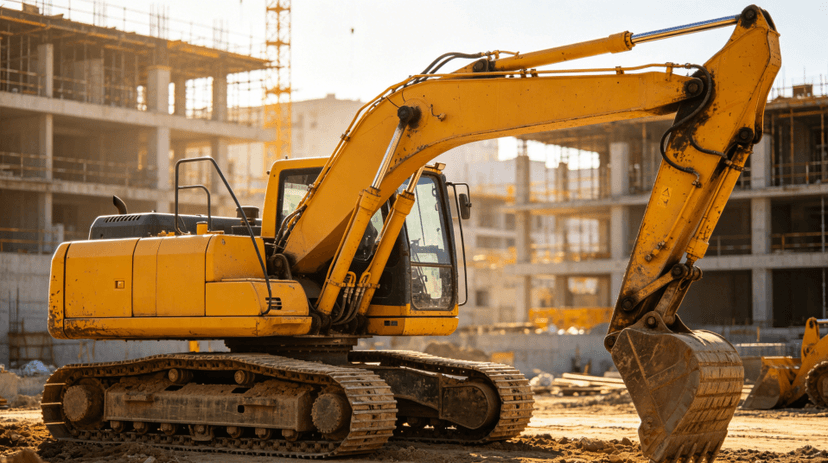
Hydraulic excavators rely on stable travel performance to move safely across job sites, climb slopes, reposition under load, and maintain productivity in demanding working environments. When hydraulic excavator travel system malfunctions appear, the problem often shows up as weak movement, slow track response, poor climbing ability, or the machine drifting to one side. For global construction equipment operators and fleet managers, understanding these symptoms is essential when evaluating hydraulic drive components such as industrial hydraulic motors.
Unlike simple mechanical wear, many excavator weak travel issues are closely connected to pressure loss, oil contamination, valve response, pilot signal instability, or internal leakage in hydraulic drive components. These faults are especially common in construction machinery hydraulic system failures where excavators operate for long hours in dust, heat, mud, or heavy-load conditions. In many international hydraulic machinery maintenance cases, the travel system fault reflects the overall working condition of the hydraulic circuit and components such as A2FE Hydraulic Axial Piston Motors.
Understanding the Hydraulic Logic Behind Excavator Travel Faults
The excavator travel system depends on hydraulic energy being converted into mechanical track movement. The hydraulic pump supplies pressure and flow, the control valves regulate direction and speed, pilot pressure sends command signals, and the travel motor transforms oil power into torque. When one part of this chain becomes unstable, the final travel performance may drop, even when the machine uses heavy-duty drive products such as the LD Series Radial Piston Motor.
From a fault analysis perspective, weak travel and travel deviation are two different symptoms, but both are usually linked to hydraulic pressure transmission and component condition. Weak travel often means the system cannot generate enough driving force, while travel deviation usually means the left and right travel circuits are not working evenly. This is why engineers often examine pumps, valves, pilot circuits, oil cleanliness, and drive motors such as the ZGM Series Radial Piston Motor.
1. Weak Excavator Travel: When the Machine Loses Driving Power
Weak excavator travel generally appears when the excavator struggles to start moving, loses speed during travel, or cannot climb slopes as expected. In some cases, the machine may travel normally without load but become noticeably weak once the ground resistance increases. This type of fault is often associated with insufficient hydraulic pressure, unstable oil flow, or reduced torque output from components such as industrial hydraulic motors.
For worldwide excavator fleet management, weak travel is not only a performance issue but also a sign that hydraulic energy is not being delivered efficiently to the travel drive. The problem may come from the pump, travel motor, valve group, hydraulic pipeline, or oil condition. When analyzing excavator weak travel issues, engineers often compare actual system pressure with the designed requirement of the travel circuit and components such as A2FE Hydraulic Axial Piston Motors.
Low Hydraulic Pump Output Pressure
The hydraulic pump acts as the main energy supplier for the excavator travel circuit. If the pump develops internal leakage, wear between precision surfaces, or poor control response, the output pressure may fall below the level required for strong travel performance. Even when the travel motor itself is structurally sound, insufficient pump pressure can prevent a component such as the LD Series Radial Piston Motor from producing enough torque.
Hydraulic pump pressure loss is often more obvious during climbing, turning, or traveling on soft ground because these conditions require higher driving force. A machine may still move on flat ground, but once the load rises, the pressure shortage becomes visible through weak movement or slow acceleration. In heavy construction machinery hydraulic system failures, this symptom can be mistaken for motor failure unless the pressure supply to products like the ZGM Series Radial Piston Motor is carefully considered.
Travel Motor Wear and Internal Leakage
The travel motor is the final hydraulic component that converts pressure and flow into track-driving torque. If internal sealing surfaces are worn, pistons are scratched, or the distribution plate is damaged, part of the hydraulic oil may leak internally instead of producing useful output. These hydraulic axial piston motor problems can reduce driving efficiency and directly cause weak travel, especially in systems using A2FE Hydraulic Axial Piston Motors.
Radial piston motor faults may appear in a similar way when internal leakage increases or mechanical resistance rises inside the motor. The motor may still rotate, but the available torque becomes insufficient under load, making the excavator feel powerless during travel. For machines working in mining, forestry, earthmoving, or road construction, reliable travel force depends heavily on the condition of components such as the LD Series Radial Piston Motor.
Excessive Pressure Loss in the Hydraulic Circuit
Not all weak travel problems begin inside the pump or motor. Hydraulic pressure can also be lost through blocked hoses, leaking fittings, restricted pipelines, stuck pressure valves, or abnormal resistance in the oil path. When pressure drops before reaching the drive motor, even robust industrial hydraulic motors cannot receive enough usable hydraulic energy.
Furthermore, pressure loss may be uneven or progressive, meaning the fault becomes worse as oil temperature rises or operating time increases. If a relief valve, reducing valve, or travel-related control valve spool sticks partially open, hydraulic oil may bypass the intended flow path and reduce travel force. In this situation, the travel circuit may fail to support the full performance range of a motor such as the ZGM Series Radial Piston Motor.
Poor Hydraulic Oil Condition
Hydraulic oil is responsible for power transmission, sealing support, cooling, and lubrication inside the excavator travel circuit. When oil becomes contaminated, aged, overheated, or insufficient, component wear accelerates and pressure transmission becomes less stable. Hydraulic oil contamination can gradually reduce the working efficiency of pumps, valves, and A2FE Hydraulic Axial Piston Motors.
Oil viscosity is also important because overheated or degraded oil can increase internal leakage inside precision hydraulic components. If the oil film becomes too weak, sealing surfaces may no longer maintain proper pressure separation, leading to weak excavator travel under load. This is why many international hydraulic machinery maintenance reports connect oil condition with the service reliability of industrial hydraulic motors.
2. Excavator Travel Deviation: When the Machine Drifts to One Side
Excavator travel deviation occurs when the machine cannot move in a straight line even though the operator does not intentionally steer. The excavator may pull left or right, making it difficult to maintain positioning accuracy on roads, slopes, foundations, and confined construction areas. In many excavator travel deviation causes, the key issue is hydraulic imbalance between the two travel sides and components such as the LD Series Radial Piston Motor.
This fault differs from general weak travel because one side of the machine usually works better than the other. The left and right travel motors may receive different pressure, different flow, or different control signals, which creates unequal track speed. For global construction equipment operators, this type of fault often points toward hydraulic circuit imbalance, valve spool response problems, or uneven performance in industrial hydraulic motors.
Unequal Pressure Between the Two Travel Motors
A straight-travel excavator requires the left and right travel circuits to deliver balanced driving force. If one travel motor receives lower pressure or suffers greater internal leakage, that side of the track will move more slowly and cause deviation. This is one of the most common excavator travel deviation causes in systems using heavy-duty motors such as the ZGM Series Radial Piston Motor.
Pressure imbalance may come from different wear levels in the two travel motors or different pressure losses in the left and right pipelines. For example, if one motor has more internal leakage due to worn sealing surfaces, it may produce less torque even when the same command is given. This type of imbalance can also appear in hydraulic axial piston motor problems involving components such as A2FE Hydraulic Axial Piston Motors.
Abnormal Pilot Pressure Signal
The pilot control circuit sends command pressure to the main control valve so the travel system can respond to the operator’s input. In many excavator systems, normal pilot pressure is often around 3.5–4.0 MPa, although exact values depend on the machine design. If pilot pressure is too low, blocked, delayed, or uneven, the valve may not open correctly to supply oil to industrial hydraulic motors.
Abnormal pilot pressure can create delayed response on one side of the travel system. The operator may push both travel controls equally, but one side receives a weaker or slower hydraulic command. As a result, the travel circuit may not synchronize properly with components such as the LD Series Radial Piston Motor.
Valve Spool Jamming Caused by Contaminated Oil
Hydraulic oil contamination is a major trigger behind valve spool jamming. Small particles can enter the clearance between the valve spool and valve body, making the spool move slowly, stick in a partial position, or fail to return smoothly. When this happens in the travel circuit, pressure and flow distribution may become unstable for products such as the ZGM Series Radial Piston Motor.
Notably, two-speed valve spools and directional valve spools are especially important in excavator travel control. If one side cannot enter or exit the correct speed range, the two tracks will no longer move in balance. This kind of construction machinery hydraulic system failure may be seen even when the pump output is normal and the travel motor, such as A2FE Hydraulic Axial Piston Motors, is not the only source of the problem.
Incorrect, Blocked, or Leaking Hydraulic Lines
Hydraulic line problems can also create travel deviation because the two sides of the travel system depend on equal oil supply. If a hose is incorrectly connected, partially blocked, internally collapsed, or leaking at the fitting, one side may receive less pressure or flow. This can prevent balanced operation between the two track drives and reduce the expected performance of industrial hydraulic motors.
In addition, hydraulic pipeline faults may be difficult to recognize because the machine may still move, but not in a straight path. A small leak, a pressure restriction, or a wrongly connected line after repair can create a clear difference between the left and right travel circuits. For excavators using radial piston drive solutions, this imbalance can affect motors such as the LD Series Radial Piston Motor.
3. Main Hydraulic Factors Behind Travel System Failures
Weak travel and travel deviation may look different in operation, but they are both connected to the same hydraulic fundamentals: pressure stability, flow balance, oil cleanliness, and component condition. If any of these factors moves outside the designed range, the travel system may lose power, drift to one side, or respond slowly. This principle applies broadly to industrial hydraulic motors used in excavators and other mobile machinery.
Hydraulic Oil Cleanliness
Hydraulic oil cleanliness directly affects the service condition of valves, pumps, and motors. Contaminated oil can scratch precision surfaces, block small passages, and cause hydraulic valve spool sticking, which leads to pressure control errors and unstable travel movement. In worldwide excavator fleet management, oil cleanliness is often linked to the reliability of drive components such as the ZGM Series Radial Piston Motor.
When contamination enters a travel control valve, it may not cause total failure immediately. Instead, it can create intermittent sticking, slow spool movement, or unequal switching between travel speeds. These hidden faults can eventually appear as excavator weak travel issues or deviation problems involving components such as A2FE Hydraulic Axial Piston Motors.
Pressure Parameters and Control Accuracy
Hydraulic pump output pressure, pilot control pressure, and valve-regulated pressure must match the excavator’s design requirements. If pressure is too low, the travel system lacks torque; if pilot pressure is unstable, the command signal becomes unreliable. For heavy-duty drive components such as the LD Series Radial Piston Motor, stable pressure is essential for predictable travel response.
Control accuracy is also affected by valve condition and internal leakage. A valve spool that does not move to the correct position may restrict oil flow, while a leaking pressure valve may reduce available system pressure. These issues can create construction machinery hydraulic system failures even when the visible symptom appears only at the tracks or in industrial hydraulic motors.
Working Condition of Key Hydraulic Components
The hydraulic pump, travel motor, control valve spool, pressure valve, pilot valve, and hydraulic line all influence travel system performance. Wear, leakage, sticking, or blockage in any of these components can change the pressure and flow delivered to the travel drive. In technical diagnosis, engineers often compare pump behavior, valve response, and motor efficiency for products such as A2FE Hydraulic Axial Piston Motors.
Hydraulic motor condition is especially important because the motor directly determines whether hydraulic energy becomes usable track torque. When radial piston motor faults occur, the machine may lose travel force, deviate to one side, or show unstable low-speed movement. In these cases, the working condition of a component such as the ZGM Series Radial Piston Motor becomes part of the core fault analysis.
4. Reading the Symptoms Correctly
A useful way to understand travel faults is to connect each symptom with the hydraulic factor most likely behind it. Weak travel usually points toward insufficient pressure, internal leakage, poor oil condition, or excessive pressure loss. Travel deviation usually suggests imbalance between the left and right circuits, unequal pilot signals, valve spool sticking, or uneven behavior in industrial hydraulic motors.
For example, if the excavator becomes weak only during climbing, the travel circuit may not be receiving enough pressure under load. If the machine always drifts to one side, the issue may involve unequal travel motor output or pressure loss in one side of the circuit. If the fault changes as the oil warms up, internal leakage or oil viscosity may be influencing components such as A2FE Hydraulic Axial Piston Motors.
Conclusion: Travel Faults Reflect Hydraulic System Stability
Hydraulic excavator travel system malfunctions are usually not random surface-level problems. Weak travel often reflects pressure loss, pump output reduction, internal motor leakage, or poor oil condition, while travel deviation usually points toward left-right hydraulic imbalance, abnormal pilot pressure, valve spool jamming, or line-related pressure differences. For global construction equipment operators, recognizing these hydraulic links helps build a clearer understanding of excavator travel performance and the role of industrial hydraulic motors.
In international hydraulic machinery maintenance and worldwide excavator fleet management, the travel system should be viewed as a complete hydraulic chain rather than a single component. Pump pressure, pilot control, oil cleanliness, valve movement, hydraulic lines, and motor efficiency all work together to determine whether the excavator travels smoothly and straight. When faults appear, the hydraulic behavior behind components such as the LD Series Radial Piston Motor provides the key to understanding the root cause.
FAQ: Hydraulic Excavator Travel System Malfunctions
What are the most common hydraulic excavator travel system malfunctions?
The most common hydraulic excavator travel system malfunctions are weak travel and travel deviation. Weak travel usually means the machine lacks driving force, while travel deviation means the excavator drifts to one side due to hydraulic imbalance, pressure loss, valve spool problems, oil contamination, or issues related to industrial hydraulic motors.
Why does an excavator become weak during travel?
Excavator weak travel issues often occur when the hydraulic system cannot deliver enough pressure, flow, or torque to the travel drive. Common causes include hydraulic pump pressure loss, internal leakage, poor hydraulic oil condition, circuit pressure loss, or reduced efficiency in components such as A2FE Hydraulic Axial Piston Motors.
What causes excavator travel deviation?
Excavator travel deviation causes are usually linked to unequal hydraulic pressure or flow between the left and right travel circuits. Uneven motor wear, pipeline leakage, pilot control faults, hydraulic oil contamination, and radial piston motor faults can all affect travel balance in systems using products such as the ZGM Series Radial Piston Motor.
Can low hydraulic pump pressure cause weak excavator travel?
Yes, low hydraulic pump pressure is one of the primary triggers behind weak excavator travel. If pump output pressure drops due to internal leakage, wear, or poor control response, the travel motor may not receive enough energy to generate strong track torque, even when the circuit uses a component such as the LD Series Radial Piston Motor.
How does hydraulic oil contamination affect excavator travel systems?
Hydraulic oil contamination can cause valve spool sticking, scratch precision hydraulic surfaces, increase internal leakage, and reduce pressure control accuracy. In global construction projects, contaminated oil may lead to weak travel, delayed response, unstable speed, or uneven track movement in circuits equipped with industrial hydraulic motors.
Why is pilot pressure important in excavator travel control?
Pilot pressure sends the control signal that allows the main valve to regulate travel direction and speed. In many excavator hydraulic systems, normal pilot pressure is often around 3.5–4.0 MPa, and abnormal pressure may cause delayed response, uneven travel force, or deviation affecting components such as A2FE Hydraulic Axial Piston Motors.
Can valve spool jamming cause excavator travel deviation?
Yes, valve spool jamming can directly disturb hydraulic pressure and flow distribution in the travel circuit. When a two-speed valve spool or directional valve spool sticks due to contamination, one side of the excavator may fail to switch correctly, resulting in travel deviation and uneven output from a drive component such as the ZGM Series Radial Piston Motor.
Why does an excavator travel normally on flat ground but become weak on slopes?
When an excavator travels normally on flat ground but becomes weak on slopes, the hydraulic system may not be able to generate enough torque under higher load. This situation may be linked to pump pressure loss, motor leakage, oil viscosity problems, or pressure loss before the travel circuit reaches the LD Series Radial Piston Motor.
Are hydraulic axial piston motor problems related to excavator travel faults?
Yes, hydraulic axial piston motor problems can lead to weak travel, slow response, unstable speed, or travel deviation when internal leakage, piston wear, or distribution surface damage reduces motor efficiency. These problems are especially relevant when analyzing travel circuits that use A2FE Hydraulic Axial Piston Motors.
Why are excavator travel faults important for global construction equipment operators?
Excavator travel faults affect productivity, positioning accuracy, fuel efficiency, and machine reliability across global construction projects, mining sites, roadwork, and earthmoving operations. For worldwide excavator fleet management, understanding hydraulic causes helps evaluate pump pressure, oil cleanliness, valve response, and the condition of industrial hydraulic motors.